Nutrition
What to Eat When You Have No Appetite on a GLP-1
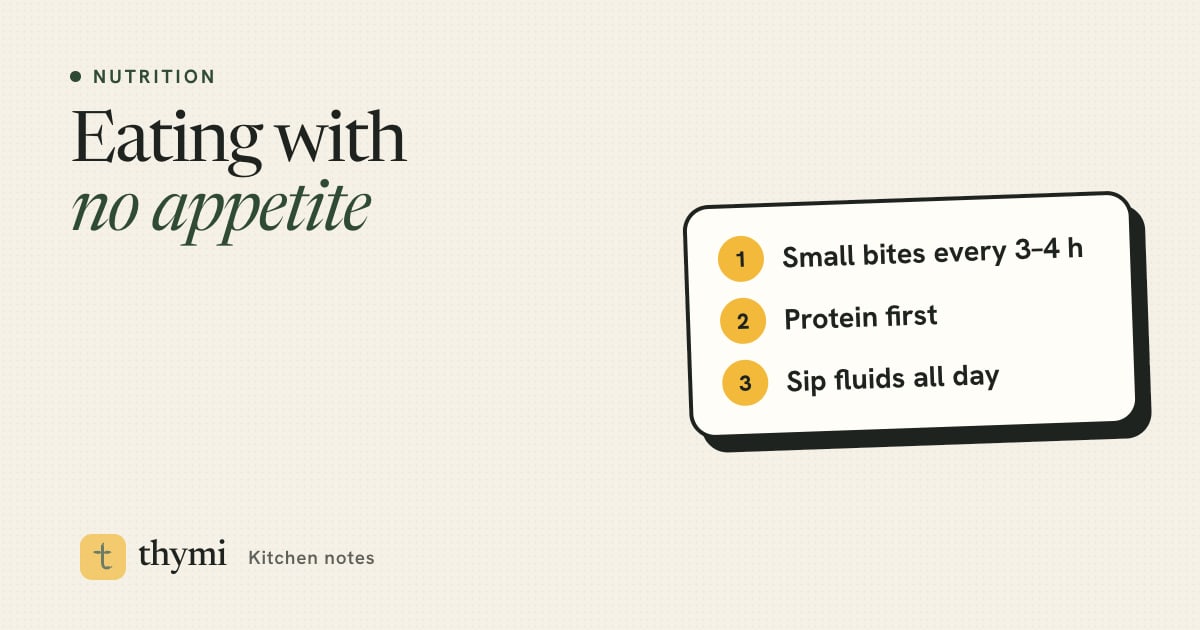
When a GLP-1 medicine takes your appetite away, the goal is not to force big meals but to eat small amounts regularly: something every 3–4 hours, protein first, in easy forms such as yogurt, eggs, soup, smoothies or cottage cheese, with fluids sipped through the day. A reminder to eat can help when hunger never shows up. If you can barely eat or drink at all, contact your prescriber.
Please note: This article is general information about food and nutrition, not medical advice. It doesn't cover doses, side-effect treatment or individual targets. Your prescriber is the right person for questions about your medicine, your health or any symptoms.
Why your appetite disappears
GLP-1 medicines such as semaglutide and tirzepatide work partly by reducing appetite and helping you feel fuller for longer, as the NHS explains. They also slow how quickly food leaves the stomach. For many people that is the point of the treatment, but it can go further than expected: whole mornings pass without a thought of food, and a normal plate looks impossible.
A 2025 joint advisory from four obesity and nutrition societies describes exactly this pattern. Limited interest in food, reduced hunger and increased fullness can lead people to go several hours without eating. For some, that means not getting enough nutrients; for others, it leads to rebound cravings for sugary or refined foods once hunger finally arrives. The advisory also notes a cycle where nausea leads to not eating, which makes nausea worse, which makes eating even less likely.
Appetite often changes over time too. NHS guidance from Guy's and St Thomas' describes a significantly smaller appetite in the first six months, which may then return somewhat, though usually smaller than before.
Five rules for low-appetite days
- Eat by the clock, not by hunger. The advisory suggests a small breakfast and then small meals every 3–4 hours, with adequate fluids. If hunger never comes, a phone alarm is a reasonable substitute; the advisory mentions reminders to eat for exactly this.
- Small and frequent beats big and rare. NHS guidance advises eating small meals more often and not skipping meals. Large meals are more likely to cause vomiting.
- Protein first. Eat the protein part of the plate before you fill up. Our guide to protein on a GLP-1 covers targets.
- Drink between bites, not instead of them. Sip water through the day. Guy's and St Thomas' suggests around 2 litres of water or low-calorie drinks daily when dealing with nausea or constipation.
- Make every bite count. On a small intake, a few bites of yogurt or lentil soup do more for you than the same space filled with crisps or sweets.
Foods that are easier to eat with no appetite
The advisory points out that smoothies and protein drinks, cottage cheese and soups are often more appealing than heavier foods such as red meat, cold cuts or hard cheese. NHS dietary advice for people on weight loss medicines lists similar choices for when you feel sick. Ideas to keep on hand:
| Type | Examples | Why it helps |
|---|---|---|
| Soft protein | Greek yogurt, cottage cheese, scrambled or boiled eggs, soft tofu | Lots of protein in a small, easy volume |
| Drinkable | Smoothie with yogurt or milk and fruit, kefir, milk, soy milk, protein shake | Easier than chewing when food doesn't appeal |
| Warm and gentle | Lentil or bean soup, chicken and vegetable soup, plain porridge | Fluid and nutrients together |
| Plain and dry | Crackers, dry toast, breadsticks, plain rice or pasta | Often tolerated when you feel queasy |
| Cold and fresh | Melon, banana, cucumber, chilled yogurt | Cold food smells less, which some find easier |
| Small and dense | Nut butter on toast, a handful of nuts, hummus with crackers | Energy and protein in a few bites |
NHS advice also suggests choosing cold foods rather than hot ones when you feel sick, sipping ginger, peppermint or fennel tea, avoiding fatty or strong-smelling foods, and not lying down soon after eating.
Ten mini-meals for no-appetite days
Each of these is small enough to manage on a bad day and includes some protein. Values are approximate.
- Greek yogurt with berries (170 g yogurt): about 17 g protein.
- A smoothie made with 1 cup milk or soy milk, half a banana and a spoon of peanut butter: about 12 g protein.
- Cottage cheese with pineapple or peach (½ cup): about 12 g protein.
- One scrambled egg on half a slice of toast: about 8–9 g protein.
- A mug of lentil soup: about 9–12 g protein, plus fiber and fluid.
- Crackers with a small tin of tuna or salmon: about 15–20 g protein.
- A glass of kefir or milk: about 8–9 g protein.
- Half a cup of edamame: about 9 g protein.
- Hummus with soft pitta (3 tbsp hummus): about 7–9 g protein with the pitta, plus fiber.
- Plain porridge made with milk: about 10–13 g protein.
Three or four of these across a day adds up to more than it looks. For more ideas, see our list of snacks under 200 calories, most of which include protein.
Don't forget fiber and fluids
Eating less usually means less fiber and less water from food, and the NHS notes both can drop when appetite falls. Constipation is common with weight loss, and the advisory recommends managing it proactively with fluids and fiber from foods, increased gradually. Helpful options include fruit, vegetables, oats, beans and lentils. NHS guidance suggests 1–2 kiwi fruit a day, a small handful of prunes or dried apricots, or a tablespoon of chia or flax seeds added to meals.
Go slowly. The advisory notes that avoiding fatty or high-fiber foods during the first few days of treatment can ease nausea, so build fiber up once you've settled. Our guide to how much fiber you need per day explains everyday targets, and the water intake guide covers fluids.
How little is too little?
There is no universal minimum that applies to everyone, which is why this is a question for your care team. What the advisory does make clear is that diets on GLP-1 medicines are often substantially lower in calories, so nutrient quality matters more, and that intake should be reassessed during treatment, for example with food logs or food photos. Warning signs worth raising with your prescriber include:
- Most days you eat only a few bites, or skip whole meals without noticing.
- You feel dizzy, weak or unusually tired, or your urine is dark.
- You can't keep fluids down, or you are vomiting repeatedly.
- You are losing weight much faster than your clinician expected.
- Food has stopped being enjoyable and that is affecting your mood.
Guy's and St Thomas' advises contacting your GP or care team if you are vomiting more than three times a day, can't keep fluids down, notice dark urine or feel lightheaded.
Using tracking on low-appetite days
Most food logging is built to stop you eating too much. On a GLP-1 it is just as useful for the opposite: spotting days where protein, fiber or total intake quietly falls too low. You don't need to weigh everything. A quick photo or a one-line note per eating occasion is enough to see a pattern over a week, and to bring real information to appointments.
Thymi has a GLP-1 mode for this. Choose "I'm on a GLP-1" and you get a higher protein target, fiber tracking and a gentle calorie goal for low-appetite days, so the app nudges you to eat enough rather than less. It doesn't track doses or give medical advice, and every target can be edited to match your prescriber's advice. Log by photo, barcode or a short description. Download Thymi free on the App Store for iPhone and Google Play for Android.
Talk to your prescriber: Persistent lack of appetite, nausea, vomiting, constipation or signs of dehydration should be discussed with your prescriber, who may adjust your treatment. Seek urgent help for severe stomach pain or if you can't keep any fluids down.
Sources
- Mozaffarian D, et al. Nutritional priorities to support GLP-1 therapy for obesity: a joint Advisory from the American College of Lifestyle Medicine, the American Society for Nutrition, the Obesity Medicine Association, and The Obesity Society. Obesity, 2025; also in The American Journal of Clinical Nutrition.
- Guy's and St Thomas' NHS Foundation Trust: Managing side effects with diet.
- NHS: Semaglutide.
Frequently asked questions
What should I eat if I have no appetite on a GLP-1?
Small, protein-first foods in easy forms: Greek yogurt, cottage cheese, eggs, soups, smoothies, milk or soy milk, and plain options such as crackers or toast. Aim for something small every 3–4 hours and sip fluids through the day.
Is it okay to skip meals if I'm not hungry on semaglutide?
NHS guidance for people on weight loss medicines advises eating small meals more often and not skipping meals. Going many hours without food can make nausea worse and make it hard to get enough protein and nutrients. If eating feels impossible, talk to your prescriber.
Are smoothies and protein shakes a good idea?
They can be. A 2025 expert advisory notes that smoothies, protein drinks, cottage cheese and soups are often easier to manage than heavier foods when appetite is low. Use them alongside whole foods rather than as a full replacement.
How do I get enough fiber when I'm eating so little?
Choose small amounts of fiber-rich foods you tolerate, such as oats, fruit, vegetables, beans, lentils, kiwi fruit, prunes or a spoon of chia or flax seeds, and increase gradually with plenty of fluids.
When should I contact my prescriber about low appetite?
Contact them if you can barely eat or drink, are vomiting repeatedly, can't keep fluids down, have dark urine or feel lightheaded, or are losing weight much faster than expected. Seek urgent care for severe symptoms.
This article is general information, not medical or nutritional advice. Talk to your prescriber or a registered dietitian before changing how you eat, especially if you have kidney disease, diabetes or another medical condition, are pregnant or breastfeeding, or have or have had an eating disorder.