Macros
How Much Protein Do You Need a Day?
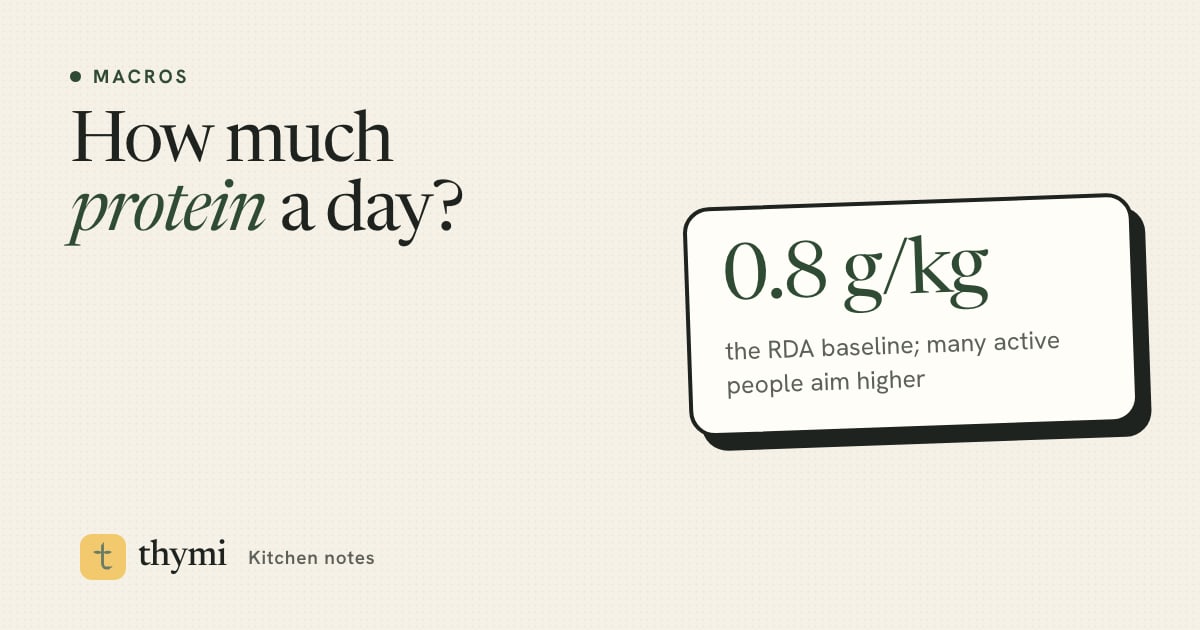
Most healthy adults need at least 0.8 g of protein per kilogram of body weight a day (about 0.36 g per pound), which is about 56 g for a 70 kg (154 lb) person. If you are active, strength training or trying to lose weight, a commonly used range is roughly 1.2–2.0 g per kg, or about 84–140 g a day at 70 kg. Spreading it across meals makes the target much easier to reach.
Why protein matters
Protein is one of the three macronutrients, alongside carbohydrate and fat, and provides about 4 calories per gram. Your body uses it to build and repair muscle, skin, hair, enzymes, hormones and immune cells. Unlike fat and carbohydrate, it is not stored in a dedicated reserve, so you need a steady supply from food.
Protein also matters for everyday eating:
- Fullness. Protein-rich meals tend to keep people satisfied for longer than meals of the same calories made mostly of refined carbs.
- Muscle. Combined with strength training, enough protein supports building muscle and helps you keep it when you are eating in a calorie deficit.
- Recovery. After exercise, protein provides the amino acids your muscles use to repair.
None of this means more is always better. Beyond your needs, extra protein is simply used for energy, and it still counts toward your calories.
How much protein per day: the numbers
The official starting point is the Recommended Dietary Allowance (RDA): 0.8 g of protein per kilogram of body weight per day for healthy adults. The RDA is set to cover the basic needs of nearly all healthy people. It is a floor to make sure you are not short, not an optimum for every goal.
For people who exercise regularly, do strength training or are losing weight, many sports nutrition and dietetics sources use a higher range of roughly 1.2–2.0 g per kg. Where you sit in that range depends on how much you train, your goal, and what you can comfortably eat.
| Situation | g per kg | g per lb |
|---|---|---|
| Healthy adult, minimum (RDA) | 0.8 | ≈ 0.36 |
| Regular exercise, general fitness | ≈ 1.2–1.6 | ≈ 0.55–0.73 |
| Strength training or losing weight | ≈ 1.6–2.0 | ≈ 0.73–0.9 |
These are commonly used ranges, not strict rules. Another way to sanity-check your number is the US Acceptable Macronutrient Distribution Range, which puts protein at 10–35% of daily calories for adults. Most targets in the table above fall inside that range.
Good to know: If you have kidney disease or reduced kidney function, liver disease, or another medical condition, do not raise your protein intake without talking to your doctor or a registered dietitian first. The right amount for you may be different.
Protein needs by body weight
To work out your own number, multiply your weight in kilograms by your chosen g/kg figure. If you think in pounds, divide by 2.2 first, or multiply pounds by the g/lb figure.
| Body weight | RDA (0.8 g/kg) | 1.2 g/kg | 1.6 g/kg | 2.0 g/kg |
|---|---|---|---|---|
| 55 kg / 121 lb | 44 g | 66 g | 88 g | 110 g |
| 65 kg / 143 lb | 52 g | 78 g | 104 g | 130 g |
| 75 kg / 165 lb | 60 g | 90 g | 120 g | 150 g |
| 85 kg / 187 lb | 68 g | 102 g | 136 g | 170 g |
| 95 kg / 209 lb | 76 g | 114 g | 152 g | 190 g |
A note for people with a larger body
If you have a lot of weight to lose, calculating protein from your current weight at 1.6–2.0 g/kg can produce a number that is very high and hard to eat. A common practical approach is to base the calculation on a goal weight or a reasonable middle weight instead. A dietitian can help you pick a figure that suits you.
Protein for weight loss
Protein does not cause weight loss on its own. Weight loss comes from eating fewer calories than you use over time. But protein can make that deficit easier to live with, which is why many people raise it when cutting calories.
- It helps preserve muscle. When you eat in a deficit, some of the weight you lose can come from muscle. Adequate protein, together with strength training, helps limit that.
- It is filling. Building meals around a protein source tends to reduce snacking and make smaller portions more satisfying.
- It slightly raises the energy cost of digestion. Your body uses more energy digesting protein than fat or carbohydrate, though the effect on your daily total is modest.
A practical approach: pick a protein target somewhere around 1.6 g/kg (or based on a goal weight), set your calories for a moderate deficit, and fill the rest of your budget with carbohydrate and fat you enjoy. Our guide to the right size of calorie deficit covers the calorie side, and how to count macros shows how protein fits into a full macro plan.
Tip: If you take a GLP-1 medication and your appetite is much lower, protein becomes even more important per bite. Our guide to eating well on GLP-1 medications has practical ideas.
High-protein foods and how much they give you
You do not need supplements to hit a higher protein target, though they can be convenient. Everyday foods add up quickly. Values below are approximate and vary by brand and preparation, so check labels for packaged foods.
| Food (portion) | Protein | Calories |
|---|---|---|
| Chicken breast, cooked (100 g / 3.5 oz) | ≈ 31 g | ≈ 165 |
| Tuna, canned in water, drained (100 g / 3.5 oz) | ≈ 25 g | ≈ 115 |
| Cottage cheese, 2% fat (1 cup) | ≈ 24 g | ≈ 185 |
| Lentils, cooked (1 cup) | ≈ 18 g | ≈ 230 |
| Greek yogurt, plain non-fat (170 g / 6 oz) | ≈ 17 g | ≈ 100 |
| Black beans, cooked (1 cup) | ≈ 15 g | ≈ 225 |
| Milk (1 cup / 240 ml) | ≈ 8 g | ≈ 85–150 |
| Peanut butter (2 tbsp) | ≈ 7 g | ≈ 190 |
| Egg (1 large) | ≈ 6 g | ≈ 72 |
| Almonds (1 oz / 28 g) | ≈ 6 g | ≈ 165 |
Notice the calorie column. Lean meats, fish, egg whites, Greek yogurt and cottage cheese give a lot of protein for relatively few calories, which helps if you are in a deficit. Nuts and peanut butter contain useful protein but much more fat, so they work better as a bonus than as your main source.
Plant-based protein
Vegetarians and vegans can meet the same targets with beans, lentils, chickpeas, tofu, tempeh, edamame, seitan, soy milk and whole grains. Plant foods differ in their amino acid makeup, so eating a variety across the day is the simplest way to cover your needs. Pulses have a bonus: they are also among the best sources of fiber.
Worked example: a 120 g protein day
Say you weigh 75 kg (165 lb), lift weights three times a week and are aiming for 1.6 g/kg: 75 × 1.6 = 120 g a day. Spread over three meals and a snack, that is roughly 30 g at each.
| Meal | What it could look like | Protein (approx.) |
|---|---|---|
| Breakfast | 3 large eggs + 1 cup milk in coffee or oats | ≈ 26 g |
| Lunch | Wrap or salad with 100 g cooked chicken breast | ≈ 35 g (with the wrap) |
| Snack | 170 g plain non-fat Greek yogurt with fruit | ≈ 17 g |
| Dinner | 1 cup lentils in a curry or stew, with rice | ≈ 22 g (with the rice) |
| Day total | ≈ 100 g | |
That lands about 20 g short of 120 g, which is very normal on a first try. Easy ways to close the gap: add a second serving of yogurt or cottage cheese, use 150 g of chicken at lunch instead of 100 g, or add tofu or an egg to dinner. Seeing the shortfall early in the day is what makes tracking useful.
How to hit your protein target
- Anchor every meal with protein. Decide the protein first, then add carbs, vegetables and fat around it.
- Front-load breakfast. Many people eat very little protein in the morning and try to catch up at dinner. Eggs, yogurt, cottage cheese or a tofu scramble move the needle early.
- Keep ready-to-eat options. Tinned fish, pre-cooked lentils, boiled eggs and single-serve yogurts make high-protein snacks effortless.
- Upgrade, don’t add. Swap regular yogurt for Greek, add beans to a soup, or choose a higher-protein bread or pasta.
- Use supplements only if they help. A protein shake can be convenient, but food first is a good rule. Check the label, as protein per scoop varies a lot between products.
- Drink water. It is a sensible habit with any eating pattern, including a higher-protein one.
Can you eat too much protein?
For healthy adults, intakes within the commonly used ranges above are generally considered safe. The practical downsides of very high protein intakes are usually about balance: if protein crowds out vegetables, fruit, whole grains and pulses, you may end up short on fiber and other nutrients. Very high intakes from processed meats also are not ideal.
People with kidney disease are a clear exception, as they are often advised to limit protein. If you have any kidney problem, diabetes with kidney involvement, or are pregnant or breastfeeding, get personal advice from your doctor or dietitian rather than following a general range.
Tracking protein without obsessing
You do not need to track protein forever. A week or two of logging is often enough to show you which meals are light on protein and which swaps fix it. After that, many people check in occasionally.
If you do want to track, Thymi gives you a protein target based on your body, activity, goal and pace, and you can change it if you prefer a different number. Its protein gauge fills as you log a meal by photo, barcode, nutrition-label photo or a quick description, so a mid-afternoon glance tells you whether dinner needs a little extra.
Frequently asked questions
How much protein do I need a day to lose weight?
Many people losing weight use a range of about 1.2–2.0 g of protein per kilogram of body weight a day, often around 1.6 g/kg. For a 70 kg (154 lb) person, 1.6 g/kg is about 112 g. If you have a lot of weight to lose, basing the number on a goal weight usually gives a more realistic target.
How much protein do I need per kg of body weight?
The RDA for healthy adults is 0.8 g per kg of body weight per day. People who exercise regularly, strength train or are in a calorie deficit commonly aim for roughly 1.2–2.0 g per kg. People with kidney disease or other medical conditions should ask their doctor.
Is 100 g of protein a day too much?
For most healthy adults, 100 g a day is within the commonly used ranges, especially for people above about 60 kg (132 lb) who are active. It works out to roughly 1.0–1.7 g/kg for people weighing 60–100 kg. If you have kidney problems, check with your doctor first.
What foods are highest in protein?
Lean meat, poultry, fish, eggs, Greek yogurt, cottage cheese, tofu, tempeh, lentils, beans and edamame are among the best everyday sources. For example, 100 g of cooked chicken breast has about 31 g of protein, and a cup of cooked lentils has about 18 g.
How much protein should I eat per meal?
There is no strict per-meal limit, but spreading protein across the day makes a higher daily target much easier to reach. Dividing your total by your number of meals, often around 25–40 g each for many adults, is a practical approach.
Can I get enough protein as a vegetarian or vegan?
Yes. Beans, lentils, chickpeas, tofu, tempeh, edamame, seitan, soy milk, dairy or eggs if you eat them, and whole grains can all contribute. Eating a variety of plant proteins across the day helps cover all the amino acids you need.
This article is general information for healthy adults, not medical or nutritional advice. Talk to a doctor or registered dietitian before changing how you eat, especially if you are pregnant or breastfeeding, have or have had an eating disorder, have a medical condition, or take medication.