Habits
How to Keep a Food Diary (and Why It Works)
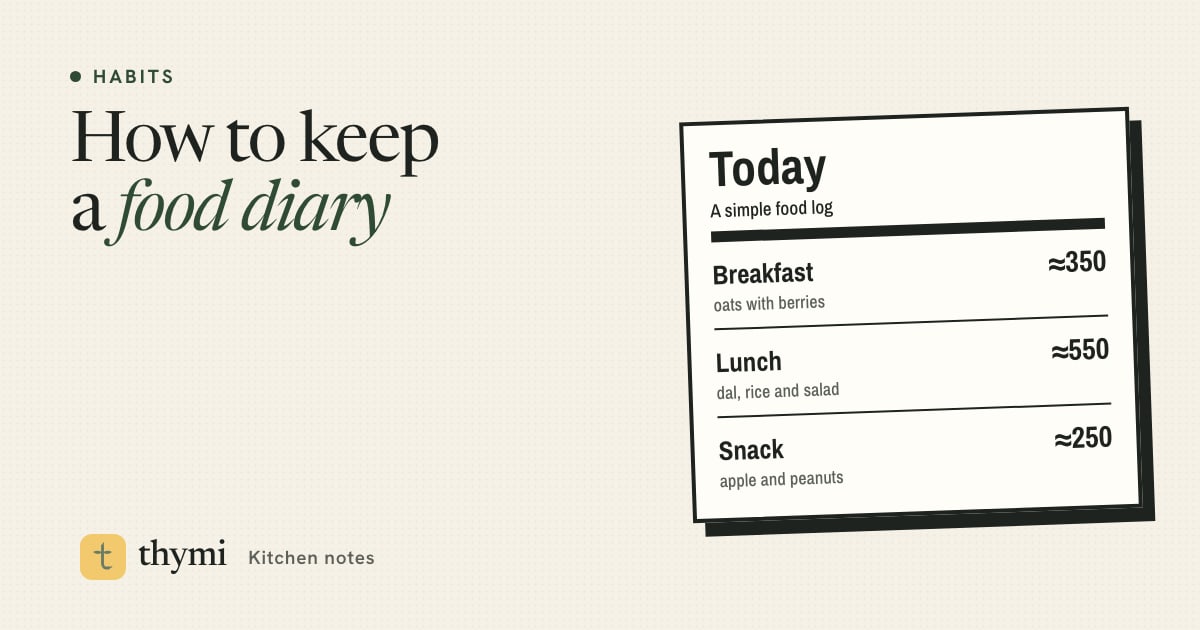
To keep a food diary, write down what you eat and drink, roughly how much and when, as close to the time as you can, then look back once a week for patterns. It works because it turns vague impressions into something you can see. Keep it short, honest and free of judgement, and it becomes a tool rather than a chore.
What a food diary is (and is not)
A food diary, also called a food journal or food log, is a simple record of what you eat and drink. It can be as basic as a list on paper or as detailed as an app that totals calories, protein and fibre for you.
It is not a test you pass or fail. It is not a list of "good" and "bad" foods. And it does not have to be permanent: many people keep one for a few weeks to learn their patterns, then log more loosely or stop altogether.
You can keep a food diary for many reasons: managing your weight, eating more protein or vegetables, noticing which foods leave you sluggish, or preparing for an appointment with a doctor or registered dietitian who has asked you to track.
Why keeping a food diary works
Most of us remember meals but forget the in-between: the handful of crisps while cooking, the milky coffee, the biscuits in a meeting. A diary catches those moments without anyone having to judge them.
It works for a few simple reasons:
- Awareness. Writing something down makes you notice it. That pause alone often changes choices, without any rules.
- Patterns become visible. One day of data says little. A week shows that you always snack at 4 pm, or skip breakfast and overeat at dinner.
- Better decisions. Once you see a pattern, you can plan around it: a filling afternoon snack, or a bigger lunch.
- Honest feedback. If you are tracking calories, your log lets you compare what you ate with your trend over time. Our beginner's guide to counting calories explains how to use those numbers.
What to record in your food diary
Start with the essentials. Add extras only if they answer a question you actually have.
The essentials
- What you ate and drank. Be specific enough to identify it later: "porridge with milk and banana" rather than "breakfast".
- Roughly how much. Cups, spoons, slices, handfuls or grams. Estimates are fine; see how to estimate portion sizes without a scale for easy comparisons.
- When. The time, or at least the meal.
- Drinks. Juice, soft drinks, milky coffees and alcohol are easy to forget and can add up. Water is worth noting if you are trying to drink more.
Useful extras
- Hunger before and fullness after, on a simple 1 to 5 scale.
- Context: where you were, who you were with, whether you were distracted.
- Mood or energy, if you suspect stress or tiredness affects your eating.
- Calories and nutrients, if you have a specific target such as protein or fibre per day.
Tip: Log as you go. Writing it down within a few minutes of eating is far more accurate than reconstructing the day at bedtime.
Paper food journal or app?
Both work. The best choice is the one you will actually use.
| Paper notebook | App | |
|---|---|---|
| Setup | Instant, no account | A few minutes to set up |
| Speed | Quick to write, slow to total | Quick with search, barcode or photo |
| Numbers | You look up and add calories yourself | Totals calories and macros for you |
| Notes and feelings | Easy, free-form | Depends on the app |
| Reviewing patterns | Flip back through pages | Daily and weekly summaries |
| Always with you | Only if you carry it | On your phone |
Paper suits people who want to focus on habits and feelings rather than numbers. An app suits people with calorie or macro targets, or anyone who wants totals without arithmetic. Some people use both: an app for food, and a few words in a notebook for how they felt.
A sample food diary day
Here is a simple example to show the level of detail that works. Calorie figures are approximate and will vary by brand and recipe. You can copy the columns as a food log template.
| Time | Food and drink | Amount | Approx. kcal | Notes |
|---|---|---|---|---|
| 7:30 | Porridge oats made with semi-skimmed milk, sliced banana | 40 g (1.4 oz) oats, 200 ml (about 7 fl oz) milk, 1 medium banana | about 350 | Hunger 4, full until 11 |
| 8:00 | Coffee with milk | 1 mug | about 30 | |
| 12:45 | Chicken salad sandwich on wholemeal bread, apple | 1 sandwich, 1 medium apple | about 500 | Ate at desk |
| 16:00 | Plain Greek yoghurt with almonds | 150 g (5.3 oz) yoghurt, small handful (about 15 g / 0.5 oz) almonds | about 240 | Hunger 3, tired |
| 19:30 | Salmon, rice, roasted vegetables cooked in olive oil | Palm-sized fillet, 1 cup cooked rice, 1 tbsp oil for the tray | about 700 | Cooked with partner |
| 21:00 | Dark chocolate | 2 squares | about 110 | Enjoyed it |
Notice what this example does well: specific foods, rough amounts, cooking oil included, and short notes that will be useful at the end of the week. Notice what it does not do: no "bad" labels, no apologies for the chocolate.
How to review your food diary each week
The diary pays off when you look back. Set aside ten minutes once a week, ideally the same day, and ask a few calm questions:
- What went well? Start here. Maybe you ate breakfast every day, or added vegetables to most dinners.
- When was I hungriest? Look for times when hunger was high or meals were large. Those are opportunities for a planned snack or a more filling earlier meal.
- What are my regular foods? Most people eat a fairly small set of meals. Improving one regular meal can matter more than any single "perfect" day.
- Where are the easy wins? Is protein low at breakfast? Is fibre low overall? Do drinks add more than expected? Our guide to how much protein you need a day can help if protein is your focus.
- What is one change for next week? Pick one, not five. Small and specific beats ambitious and vague.
If you are tracking weight alongside your diary, look at the weekly average rather than individual days, since water and food in your system make daily numbers jump around.
How to keep your food diary guilt-free
A food diary only helps if you are honest in it, and people are only honest when the diary feels safe. These habits help:
- Record, do not grade. Write "pizza, 3 slices", not "pizza, 3 slices (bad!)". Neutral words keep the record useful.
- Log the hard days too. A big celebration meal is just data. Those days are often the most informative.
- Estimate rather than skip. If you do not know the exact amount, a rough guess is far better than a blank.
- Allow gaps. Missed a day? Start again at the next meal. There is no need to backfill from memory or to start the week over.
- Watch how it makes you feel. If logging leaves you anxious, obsessive or restrictive, take a break.
Good to know: Detailed food tracking is not right for everyone. If you have or have had an eating disorder, talk to a doctor or registered dietitian before keeping a food diary, and stop if it starts to feel compulsive.
Adapting your food diary to your goal
The same basic diary can answer different questions. Adjust what you focus on depending on why you started.
Managing your weight
Amounts matter most here, along with drinks, cooking fats and snacks, since these are the items most often underestimated. Adding calorie estimates turns your diary into a calorie log; pair it with a weekly weight average rather than daily weigh-ins.
Eating more protein, fibre or vegetables
You may not need calories at all. A tick next to each meal that includes a protein food, or a tally of fruit and vegetable portions, can be enough to see where the gaps are.
Understanding energy and appetite
Here the extras earn their place. Note hunger before eating, fullness afterwards and your energy an hour or two later. Over a couple of weeks you may notice which meals keep you satisfied and which leave you hungry soon after.
Preparing for an appointment
If a doctor or registered dietitian has asked you to keep a food diary, ask exactly what they want recorded and for how long. Follow their format, include everything, including drinks and supplements, and bring the diary with you.
Making the habit stick
The hardest part of a food diary is the second and third week, when the novelty fades. A few practical tricks:
- Attach it to something you already do. Log while the kettle boils, or right after you put your plate down.
- Make it fast. Reuse entries for foods you eat often. In an app, recent foods, barcode scanning or a quick photo cut the effort to seconds.
- Keep it visible. Leave the notebook on the kitchen table, or put the app on your Home Screen.
- Set a time limit. Commit to two weeks, then decide whether to continue. A clear end point makes starting easier.
Thymi was built for this kind of low-friction logging: you can type "porridge with milk and a banana", snap a photo or scan a barcode, and the app keeps the day's totals for you without red numbers or warnings when you go over.
Frequently asked questions
What should I write in a food diary?
At minimum, record what you ate and drank, roughly how much and when. Useful extras include hunger and fullness, where you were, your mood or energy, and calories or nutrients if you have a specific target.
Is a food diary the same as counting calories?
Not necessarily. A food diary can simply list foods and amounts without any numbers. Counting calories adds energy totals to that record. Many people start with a simple diary and add calories later if they want them.
How long should I keep a food diary?
Two to four weeks is often enough to spot patterns. Some people continue longer because it helps them stay consistent; others stop once they have learned what they needed. Choose what feels useful rather than stressful.
Should I use a paper food journal or an app?
Both work. Paper is quick and good for notes about feelings and context. An app is better if you want calorie and macro totals, quick logging by search, barcode or photo, and automatic summaries.
What if I forget to log a meal?
Make your best estimate and move on, or simply leave the gap. One missing meal does not ruin your diary. Logging as soon as you eat, or right after you sit down, makes forgetting less likely.
This article is general information for healthy adults, not medical or nutritional advice. Talk to a doctor or registered dietitian before changing how you eat, especially if you are pregnant or breastfeeding, have or have had an eating disorder, have a medical condition, or take medication.