Tracking
How to Estimate Portion Sizes Without a Food Scale
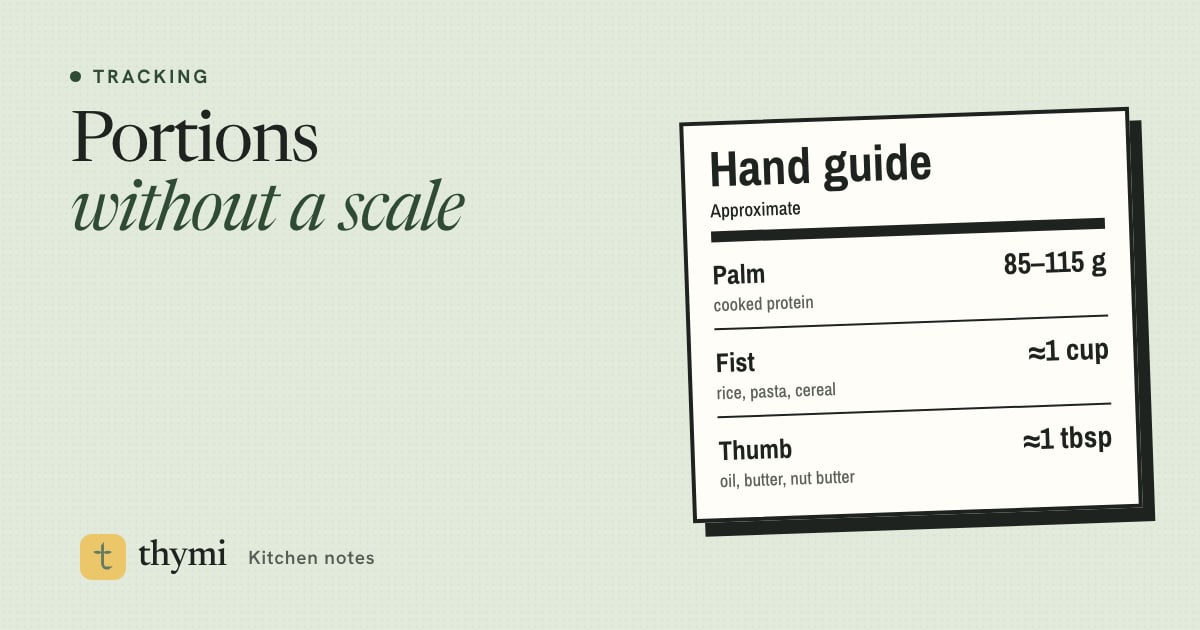
You can estimate portion sizes without a scale by comparing food to your hand or familiar objects: a palm is roughly one portion of cooked meat, a fist is about a cup, and a thumb is about a tablespoon. These are approximations, not measurements, so calibrate them once against measuring cups and save a scale for calorie-dense foods.
Why portion size is where tracking goes wrong
When people track food, the hardest part is rarely knowing what they ate. It is knowing how much. "Pasta" can mean a modest side or a heaping restaurant bowl, and the calories scale with the amount.
Weighing everything is the most precise answer, but few people want to carry a scale to work or weigh dinner at a friend's house. The good news is that you do not need perfection. A consistent, reasonable estimate is enough for most goals, especially if you check your weight trend over a few weeks. Our beginner's guide to counting calories explains why consistency matters more than precision.
This guide gives you two tools: your hands, which are always with you, and everyday objects, which are easy to picture.
The hand portion method
Your hand is a built-in measuring tool. It is not exact, since hands differ in size, but larger people tend to have larger hands and often need larger portions, so it scales reasonably well. Here are the four shapes to know.
Palm: protein foods
The size and thickness of your palm, without fingers, is roughly 3 to 4 oz (about 85 to 115 g) of cooked meat, fish, tofu or tempeh. A chicken breast that covers your palm is a good example.
Fist: grains, cereal and vegetables
A closed fist is about 1 cup (roughly 240 ml). Use it for cooked rice, pasta, breakfast cereal, chopped fruit or vegetables.
Cupped hand: smaller carb portions and snacks
One cupped hand holds roughly half a cup. A small, level handful of nuts is about 1 oz (28 g), which is a common single portion.
Thumb: fats and spreads
Your whole thumb, from the tip to the base, is about 1 tablespoon (15 ml). The top joint, the tip, is about 1 teaspoon (5 ml). This is the most useful comparison of all, because oils, butter, nut butter and dressings are calorie-dense and easy to underestimate.
Everyday objects as a portion size guide
If you prefer pictures to hand shapes, these household comparisons are widely used and easy to remember:
- Deck of cards: about 3 oz (85 g) of cooked meat or fish.
- Baseball: about 1 cup, similar to a fist.
- Tennis ball: about half a cup, or roughly one medium piece of fruit.
- Three or four stacked dice: about 1 to 1.5 oz (30 to 40 g) of hard cheese.
- A single die: about 1 teaspoon of butter or spread.
- Golf ball: about 2 tablespoons, a typical portion of peanut butter or hummus.
- Computer mouse: about one medium potato.
Pick whichever comparisons stick in your mind. Two or three that you use every day are more valuable than a long list you forget.
Portion size cheat sheet
All amounts and calories below are approximate and vary with the specific food, brand and cooking method.
| Visual guide | Approx. amount | Good for | Example (approx.) |
|---|---|---|---|
| Palm / deck of cards | 3–4 oz (85–115 g) cooked | Meat, fish, tofu | 100 g (3.5 oz) cooked chicken breast: about 165 kcal |
| Fist / baseball | About 1 cup (240 ml) | Rice, pasta, cereal, vegetables | 1 cup cooked white rice: about 200 kcal |
| Cupped hand / tennis ball | About ½ cup | Grains, beans, fruit | ½ cup cooked pasta: about 100 kcal |
| Small handful | About 1 oz (28 g) | Nuts, seeds, dried fruit | 1 oz almonds: about 165 kcal |
| 3–4 stacked dice | 1–1.5 oz (30–40 g) | Hard cheese | 1 oz cheddar: about 115 kcal |
| Golf ball | About 2 tbsp | Nut butter, hummus, dips | 2 tbsp peanut butter: about 190 kcal |
| Whole thumb | About 1 tbsp (15 ml) | Oil, butter, dressing | 1 tbsp olive oil: about 120 kcal |
| Thumb tip / one die | About 1 tsp (5 ml) | Butter, oil, sugar | 1 tsp butter: about 35 kcal |
Good to know: Cooked and raw weights are different. Meat loses water when cooked, and rice and pasta absorb it, so 100 g of dry pasta becomes a much heavier cooked portion. Make sure the entry you log matches the state the food was in when you measured it.
Common portion traps
A handful of foods cause most portion control surprises. These are worth extra attention.
Cooking oils and dressings
A "drizzle" from the bottle is often two or three tablespoons. Pour oil into a spoon first, or use your thumb as a guide. Salad dressings, mayonnaise and butter on bread follow the same pattern.
Cereal, granola and pasta
Large bowls make generous pours look normal. Granola in particular is dense, so a portion that looks small can carry more calories than you expect. Compare your usual bowl to the serving size on the pack; our guide on how to read a nutrition facts label shows how to scale it.
Nuts, cheese and nut butter
These are nutritious but calorie-dense, and they are often eaten straight from the packet. A heaped spoon of peanut butter can easily be double a level one.
Drinks
Glass sizes vary a lot. A large wine glass or a tall juice glass may hold much more than a standard serving. Check the volume of your favourite glass once, in ml or fl oz, so you know what "one glass" means at home.
Restaurant and takeaway meals
Restaurant portions are often larger than home portions, and they include more hidden fat. Break the plate into parts using the hand method, then add a little for cooking oil. Our guide to tracking calories when eating out has more practical tips.
Calibrate your eye in one week
Visual estimates get much better with a little practice. You do not need to measure forever, just long enough to train your eye.
- Serve first, then measure. Put your usual portion of rice, cereal or pasta on your plate, then tip it into a measuring cup. The difference is often surprising.
- Know your dishes. Fill your everyday bowl and mug with water and measure the volume. Now "half a bowl" has a meaning.
- Check the dense foods. Measure oil, nut butter and cheese with a spoon for a week. These are where estimates drift most.
- Take reference photos. A photo of a measured portion on your own plate becomes a quick visual reminder later.
Tip: Photo-based trackers estimate portions in a similar way to your eye, using the plate and nearby objects for scale. If you use one, a fork or your hand in the frame helps. Read how accurate AI calorie counters are for more on getting good estimates from a photo.
Portion control without strict rules
Knowing portion sizes is useful for tracking, but it can also help you eat in a way that feels satisfying without counting anything. A few gentle habits:
- Build the plate in order. Start with a palm or two of protein, add a fist or two of vegetables, then add grains or potatoes and a thumb of fat. The proportions do much of the work for you.
- Serve from the kitchen. Plating food before you sit down, rather than serving from dishes on the table, makes it easier to notice how much you are taking. Seconds are still allowed.
- Portion snacks into a bowl. Eating from a large bag makes it hard to know when you have had enough. A small bowl gives a natural stopping point.
- Use your hunger as data. If a palm of protein and a fist of rice leaves you hungry an hour later, that is useful information. Adjust the portion or add more vegetables or protein next time.
- Adjust for your needs. A single hand portion is a reference, not a rule. Taller, more active people often need two palms or two fists at meals; smaller or less active people may need less.
If you want to turn these portions into numbers, our guide on how to count macros shows how protein, carb and fat portions add up across a day.
When a food scale is worth it
Hand and object estimates are enough for many people most of the time. A simple kitchen scale earns its place in a few situations:
- Calibration. A week or two of weighing your regular foods makes all your later estimates more accurate.
- Calorie-dense foods. Oils, nuts, nut butter, cheese, granola and chocolate pack a lot of energy into small amounts, so small errors add up.
- Foods you eat every day. Weigh your usual breakfast once, save it, and reuse the entry.
- When progress stalls. If your weight trend has not moved for several weeks, weighing for a short period can show whether portions have crept up.
- Batch cooking. Weigh the finished pot and divide by portions to log a home recipe accurately.
If weighing food makes you anxious or starts to feel compulsive, step back. Rough estimates are fine, and you can always talk to a registered dietitian about an approach that suits you.
Putting it together: an example plate
Imagine a home-cooked dinner of salmon, rice, broccoli and a buttery sauce. Using the hand method:
- Salmon: about one palm, roughly 4 oz (115 g) cooked.
- Rice: about one fist, roughly 1 cup cooked.
- Broccoli: about one fist; vegetables are low in calories, so a rough guess is fine.
- Butter in the sauce: about one thumb, roughly 1 tablespoon.
Log those four items and you have a reasonable estimate in under a minute. In Thymi you could type exactly that, "palm of salmon, a cup of rice, broccoli, a tablespoon of butter", and adjust any item if it looks off.
Frequently asked questions
How can I measure portions without a scale?
Use your hand or familiar objects. A palm is roughly 3 to 4 oz (85 to 115 g) of cooked protein, a fist is about 1 cup, a cupped hand is about half a cup and a thumb is about 1 tablespoon. These are approximations, so calibrate them against measuring cups once.
What is the hand portion method?
The hand portion method uses your palm for protein foods, your fist for grains and vegetables, a cupped hand for smaller carb portions or snacks, and your thumb for fats such as oil and butter. It is quick and always available, though it is an estimate.
How big is a portion of meat?
A common single portion of cooked meat or fish is about 3 to 4 oz (85 to 115 g), roughly the size and thickness of your palm or a deck of cards. Your own needs may be higher or lower depending on your goals.
What does 1 cup of food look like?
About the size of a closed fist or a baseball. It is a useful reference for cooked rice, pasta, cereal and chopped vegetables or fruit.
Do I need a food scale to count calories?
No. Many people track successfully with visual estimates. A scale is most useful for a short calibration period, for calorie-dense foods such as oils and nuts, and when progress has stalled for several weeks.
This article is general information for healthy adults, not medical or nutritional advice. Talk to a doctor or registered dietitian before changing how you eat, especially if you are pregnant or breastfeeding, have or have had an eating disorder, have a medical condition, or take medication.