Tracking
How to Read a Nutrition Facts Label
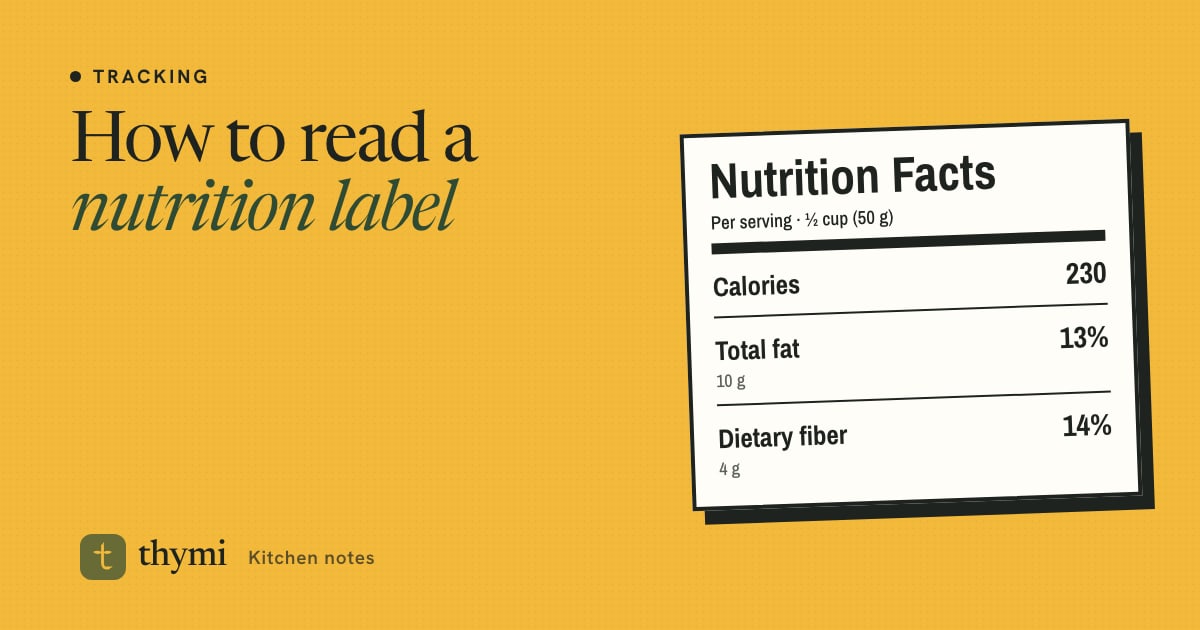
To read a Nutrition Facts label, start with the serving size and servings per container, then check calories, then use the % Daily Value to judge each nutrient: 5% DV or less is low and 20% DV or more is high. Look for less saturated fat, sodium and added sugars, and more fibre, vitamin D, calcium, iron and potassium. Finally, scale everything to the amount you actually eat.
The Nutrition Facts label at a glance
The Nutrition Facts label on US packaged foods follows a standard layout set by the FDA, so once you know how to read one, you can read them all. From top to bottom it shows:
- Servings per container and serving size
- Calories per serving, in large bold type
- Nutrients, each with an amount and, for most, a % Daily Value
- Vitamins and minerals: vitamin D, calcium, iron and potassium
- A footnote explaining that % Daily Values are based on a 2,000-calorie diet
The FDA's own guide, How to Understand and Use the Nutrition Facts Label, is a good reference to keep handy. Below, we go through each part in plain language.
Serving size and servings per container
Everything else on the label depends on this line, so read it first.
Serving size is shown in a familiar household measure, such as "1 cup" or "2 cookies", followed by the metric amount in grams or millilitres. It reflects the amount people typically eat at one time, not a recommendation of how much you should eat.
Servings per container tells you how many of those servings are in the whole package. A bag of crisps or a bottle of juice may contain two or more servings even if many people finish it in one go.
All the numbers below the serving size, from calories to potassium, are for one serving. If you eat two servings, double them. If you eat half, halve them.
Good to know: Some packages that could be eaten in one or several sittings show a dual-column label: one column per serving and one for the whole package. This saves you the maths.
Calories
Calories show how much energy you get from one serving. They come from the three macronutrients, plus alcohol where relevant:
- Protein: 4 kcal per gram
- Carbohydrate: 4 kcal per gram
- Fat: 9 kcal per gram
- Alcohol: 7 kcal per gram
If you add up the macros yourself, your total may not exactly match the label. Rounding rules and the way fibre is counted mean small differences are normal. Use the printed calorie figure for tracking.
Whether a calorie number is "a lot" depends on your daily needs. If you are not sure what yours are, read how many calories you should eat a day.
% Daily Value and the 5/20 rule
The % Daily Value (% DV) tells you how much one serving contributes to the recommended daily amount of a nutrient, based on a 2,000-calorie diet for general nutrition advice. Your own needs may be higher or lower, but % DV is still a quick way to compare.
The FDA's rule of thumb:
- 5% DV or less of a nutrient per serving is considered low.
- 20% DV or more per serving is considered high.
Use it in both directions. For nutrients many people want less of, such as saturated fat, sodium and added sugars, aim for lower % DV. For nutrients many people want more of, such as dietary fibre, vitamin D, calcium, iron and potassium, look for higher % DV.
% DV also makes comparisons easy. Two breakfast cereals with similar calories might differ a lot in fibre or added sugars, and the % DV shows that at a glance.
Daily Values used on the label
These are the reference amounts behind the percentages for adults and children aged 4 and over:
| Nutrient | Daily Value |
|---|---|
| Total fat | 78 g |
| Saturated fat | 20 g |
| Cholesterol | 300 mg |
| Sodium | 2,300 mg |
| Total carbohydrate | 275 g |
| Dietary fibre | 28 g |
| Added sugars | 50 g |
| Protein | 50 g |
Reading the nutrients line by line
Total fat, saturated fat and trans fat
Total fat includes all types of fat. Underneath, saturated fat and trans fat are listed separately because general dietary guidance is to limit them. Trans fat has no % DV. A label can say 0 g trans fat when a serving contains less than 0.5 g, so if you see "partially hydrogenated oil" in the ingredients, there may be a small amount present.
Cholesterol
Listed in milligrams with a % DV. It is found in animal foods such as eggs, meat and dairy.
Sodium
Sodium is listed in milligrams. Packaged and restaurant foods are major sources for many people, and % DV is the easiest way to spot salty products. A soup at 30% DV per serving is high; one at 5% is low.
Total carbohydrate and dietary fibre
Total carbohydrate includes starch, sugars and fibre. Dietary fibre is listed beneath it, and most people benefit from more. Our guide on how much fibre you need per day has easy ways to reach your target.
Total sugars vs added sugars
This is one of the most useful lines on the newer label. Total sugars includes sugars naturally present in foods such as milk and fruit, as well as any added during processing. It has no % DV.
Added sugars ("Includes X g Added Sugars") counts only sugars added during processing, such as table sugar, syrups and honey, or sugars from concentrated fruit juice beyond what you would expect from the same amount of juice. It has a % DV based on 50 g a day. Plain yoghurt might show several grams of total sugars from milk but 0 g added sugars; a flavoured yoghurt will show both.
Protein
Protein is listed in grams. A % DV is usually not required for protein, so many labels show only the amount. If protein is a focus for you, see how much protein you need a day.
Vitamins and minerals
The current label must list vitamin D, calcium, iron and potassium, with amounts and % DV. Manufacturers can list others voluntarily. Here, a higher % DV is usually what you are looking for.
A worked example: reading a granola label
Here is a simplified, hypothetical label for a granola. The % DV figures are calculated from the Daily Values above.
| Per serving: ½ cup (50 g) · about 8 servings per container | Amount | % DV |
|---|---|---|
| Calories | 230 | |
| Total fat | 10 g | 13% |
| Saturated fat | 1.5 g | 8% |
| Trans fat | 0 g | |
| Sodium | 95 mg | 4% |
| Total carbohydrate | 32 g | 12% |
| Dietary fibre | 4 g | 14% |
| Total sugars | 12 g | |
| Includes added sugars | 10 g | 20% |
| Protein | 5 g |
How to read it:
- Serving size first. One serving is half a cup, or 50 g (about 1.8 oz). Granola is dense, and a typical bowl may hold a full cup or more.
- Calories. 230 kcal per half cup. If you pour a full cup, that is two servings, about 460 kcal before milk or yoghurt.
- The 5/20 rule. Sodium is low at 4% DV. Fibre is a decent 14% DV. Added sugars are high at 20% DV per serving, so a full-cup bowl would be 40% DV, or 20 g.
- Check the maths. 10 g fat × 9 + 32 g carbohydrate × 4 + 5 g protein × 4 is about 238 kcal, close to the 230 on the label. The small gap is normal.
This does not make the granola "bad". It tells you how to fit it in: perhaps a smaller portion on top of plain yoghurt, which adds protein without added sugars.
Tip: Measure your usual bowl of cereal or granola once with a measuring cup. Knowing that "my bowl" equals two servings makes every future label easier. Our guide to estimating portion sizes without a scale has more shortcuts.
How UK and EU nutrition labels differ
If you shop in the UK or Europe, labels look different, though the information is similar:
- Per 100 g or 100 ml. Nutrition is shown per 100 g or 100 ml, which makes it easy to compare products of different sizes. Many packs also show a per-portion column.
- Energy in kJ and kcal. Energy is listed in both kilojoules and kilocalories. Use the kcal figure if you track calories.
- Salt instead of sodium. Labels list salt rather than sodium.
- Reference intakes. Instead of % Daily Value, some labels show % of a reference intake for an average adult.
- Traffic-light colours. In the UK, many front-of-pack labels use red, amber and green to show whether a product is high, medium or low in fat, saturated fat, sugars and salt. These colours are a quick guide for comparing similar products.
The skills are the same everywhere: check the amount, scale it to your portion, and compare similar products.
Using nutrition labels when you track
If you count calories or macros, the label is one of the most reliable sources you have, because it describes the exact product in your hand.
- Log the amount you ate, not the serving. Weigh or measure if you can, and scale the per-serving numbers.
- Save foods you buy often. Enter or scan a product once and reuse it.
- Compare before you buy. Looking at protein, fibre and added sugars side by side helps you choose products that fit your goals.
In Thymi, you can scan a product's barcode or take a photo of the nutrition label itself, then adjust the amount to what you actually ate.
Frequently asked questions
What is the 5/20 rule on nutrition labels?
It is the FDA rule of thumb for % Daily Value: 5% DV or less of a nutrient per serving is low, and 20% DV or more is high. Use it to choose foods lower in saturated fat, sodium and added sugars and higher in fibre, vitamin D, calcium, iron and potassium.
What does % Daily Value mean?
It shows how much one serving contributes to the daily reference amount of a nutrient, based on a 2,000-calorie diet for general nutrition advice. Your own needs may differ, but it is a quick way to judge whether a food is high or low in a nutrient.
What is the difference between total sugars and added sugars?
Total sugars includes sugars naturally found in foods such as milk and fruit plus any added sugars. Added sugars counts only sugars added during processing, such as table sugar, syrups and honey. Added sugars has a % Daily Value; total sugars does not.
Is the serving size on a label how much I should eat?
No. The serving size reflects the amount people typically eat at one time, not a recommendation. All the nutrition numbers are per serving, so scale them to the amount you actually eat.
Why do the calories not match the macros on a label?
Rounding rules and the way fibre is counted mean that adding up protein, carbohydrate and fat at 4, 4 and 9 kcal per gram often gives a slightly different total. Small differences are normal, so use the printed calorie figure.
This article is general information for healthy adults, not medical or nutritional advice. Talk to a doctor or registered dietitian before changing how you eat, especially if you are pregnant or breastfeeding, have or have had an eating disorder, have a medical condition, or take medication.