Nutrition
Calories in Alcohol: Beer, Wine, Spirits and Mixers Compared
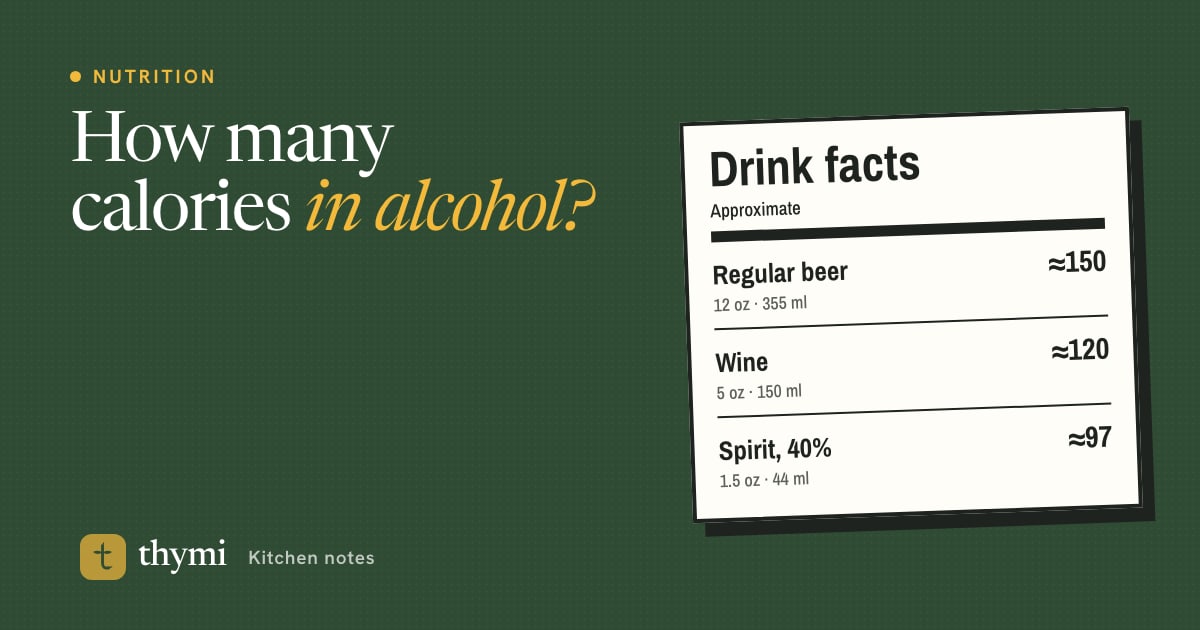
Pure alcohol contains about 7 calories per gram, almost as much as fat, so a US standard drink with 14 g of alcohol carries about 98 calories before you count any sugar or mixer. In practice, a 12 oz (355 ml) regular beer is roughly 150 kcal, a 5 oz (150 ml) glass of wine about 120 to 125 kcal and a 1.5 oz (44 ml) shot of 80-proof spirit about 95 to 100 kcal. Those calories do not fill you up, so they are easy to overlook.
Why alcohol has calories
Alcohol (ethanol) is a source of energy in its own right. Each gram provides about 7 kcal, compared with 4 kcal per gram for protein and carbohydrate and 9 kcal per gram for fat. Unlike those nutrients, alcohol provides energy but essentially nothing else your body needs.
The calories in a drink come from two places:
- The alcohol itself, which depends on how strong the drink is and how much you pour.
- Everything else: the leftover sugars and carbohydrates in beer and wine, and the sugar in mixers, juices, syrups, cream and liqueurs.
The standard drink
In the US, a standard drink is defined as one containing about 14 g of pure alcohol. At 7 kcal per gram, that is about 98 kcal from the alcohol alone. Roughly, it equals:
- 12 oz (355 ml) of regular beer at about 5% alcohol
- 5 oz (150 ml) of wine at about 12% alcohol
- 1.5 oz (44 ml) of 80-proof (40%) spirit
In the UK, drinks are measured in units instead. One unit is 10 ml, or 8 g, of pure alcohol, which works out to about 56 kcal from the alcohol.
Working it out yourself
If you know the volume and the alcohol by volume (ABV) on the label, you can estimate the alcohol calories: volume in ml × ABV × 0.79 (the density of alcohol) × 7. For a 355 ml beer at 5%: 355 × 0.05 × 0.79 × 7 ≈ 98 kcal from alcohol. The rest of the beer's roughly 150 kcal comes from carbohydrate.
Calories in common drinks
These are typical approximate values. Strength, recipe and especially pour size vary a lot, so check labels where you can.
| Drink | Serving | Approx. kcal |
|---|---|---|
| Regular beer (about 5%) | 12 oz (355 ml) | ≈ 150 |
| Light beer | 12 oz (355 ml) | ≈ 100 |
| Regular beer (about 5%) | 16 oz (473 ml) US pint | ≈ 200 |
| Lager (about 4%) | UK pint, 20 fl oz (568 ml) | ≈ 180 or more |
| Wine, red or white (about 12%) | 5 oz (150 ml) | ≈ 120–125 |
| Wine, large pour (about 12%) | 8.5 oz (250 ml) | ≈ 200–210 |
| Spirit, 80 proof (40%), neat | 1.5 oz (44 ml) | ≈ 95–100 |
| Spirit with diet or zero-sugar mixer | 1.5 oz (44 ml) + mixer | ≈ 95–100 |
| Spirit with regular soda or juice | 1.5 oz (44 ml) + 6 oz (180 ml) | ≈ 160–200 |
| Sweet, creamy or large cocktails | One drink | Often 200+, sometimes several hundred |
Two patterns stand out. First, stronger and bigger drinks scale up quickly: a craft beer at 7% or 8% has noticeably more calories than a 5% lager of the same size. Second, the mixer can matter as much as the alcohol. Switching from a regular to a diet mixer removes most of the extra calories.
Good to know: home pours are often larger than standard servings. A generous glass of wine can easily be 8 oz (250 ml) or more, which is closer to two standard drinks than one. If you are unsure, pour into a measuring cup once to see what your usual glass holds.
How alcohol affects weight loss
Alcohol does not cause weight gain in some special way, but it can make a calorie deficit harder to keep for several reasons:
- Calories that do not fill you up. Drinks rarely make you eat less at your next meal, so their calories tend to be added on top.
- Lowered inhibitions. After a drink or two, many people find it harder to stick to the food choices they planned, and late-night snacks become more tempting.
- Appetite. Many people notice they feel hungrier when drinking, and the morning after.
- Sleep. Alcohol can disrupt sleep quality, and short or poor sleep tends to make hunger and cravings harder to manage the next day.
- Your body prioritizes alcohol. It treats alcohol as something to clear, so it is metabolized ahead of other fuels while it is in your system.
None of this means a drink ruins your progress. What matters for weight is your overall intake across weeks, and drinks are simply part of that total.
Worked example: what a night out adds up to
Imagine someone with a daily target of 1,900 kcal who goes out on Saturday:
- Three 16 oz (473 ml) pints of regular beer: about 3 × 200 = 600 kcal
- A portion of fries on the way home: roughly 300 to 500 kcal, depending on size
That is about 900 to 1,100 kcal, around half the day's target, mostly in the late evening. Doing this every weekend can quietly cancel out much of a 500 kcal-a-day deficit. If progress has stalled, this kind of pattern is worth checking; our guide to the weight loss plateau covers other common causes.
Now the same evening with a few changes: two pints instead of three, a glass of water between them, and dinner eaten before going out so the fries are less tempting. That comes to about 400 kcal, roughly 500 to 700 kcal less, and still a sociable evening.
Looking at the week rather than the day also helps. A calorie deficit is really a weekly total, so a planned evening out can fit if the rest of the week is steady.
How to log alcohol accurately
Drinks are among the most commonly forgotten items in a food diary. A few habits help:
- Log each drink as you have it, or log your planned drinks before you go out. Trying to remember the next morning rarely works.
- Use the right size. Note whether it was a bottle, a can, a US pint (16 oz), a UK pint (20 fl oz, 568 ml), a small or large glass of wine, or a single or double measure.
- Check the strength. The ABV on the label makes a real difference for beer and cider.
- Count the mixer separately if your tracker lists the spirit on its own.
- Include the food that comes with it: bar snacks, late-night takeaway and the next day's breakfast.
- Be kind about it. Logging is information, not judgment. An honest log of a big night tells you far more than a perfect log of the days around it.
In Thymi you can log a drink the way you would describe it, such as "two large glasses of red wine", or scan the barcode on a can or bottle. If the estimate is off, "Fix it" lets you correct it in plain words, for example "it was a 7% IPA, not a lager".
For more on recording what you eat and drink, see our food diary guide, and for restaurants and bars specifically, how to track calories when eating out.
Lower-calorie choices if you choose to drink
There is no health reason to start drinking, and not drinking is always the lowest-calorie option. If you do choose to drink, these choices reduce the calories:
- Decide your limit before you start, and plan it into your day.
- Choose smaller servings: a bottle instead of a pint, a small glass of wine instead of a large one, a single instead of a double.
- Pick light beers or lower-strength options.
- Use diet or zero-sugar mixers, or soda water with lime.
- Alternate with water or a soft drink.
- Try alcohol-free beer, wine or spirits, which are usually much lower in calories, though not always calorie-free, so check the label.
- Eat a proper meal first. Saving calories by skipping meals before drinking makes you more likely to overeat later and is not advisable. A filling, protein-rich meal is a better plan; see foods that keep you full.
Tip: a long drink, such as a spritzer made with wine and soda water, or a spirit with plenty of soda water, takes longer to finish and contains fewer calories than the same time spent on full glasses.
Drinking guidelines and when to avoid alcohol
Calories are only one part of the picture. Many countries publish low-risk drinking guidelines, and it is worth knowing the one that applies where you live. In the UK, for example, the NHS advises not regularly drinking more than 14 units a week, spread over three or more days, with several drink-free days. The NHS alcohol advice pages explain units and risks in more detail.
To put units into everyday terms:
| UK drink | Approx. units | Approx. kcal from the alcohol |
|---|---|---|
| Pint (568 ml) of 4% lager | ≈ 2.3 | ≈ 125 |
| Medium glass (175 ml) of 12% wine | ≈ 2.1 | ≈ 115 |
| Single measure (25 ml) of 40% spirit | 1 | ≈ 55 |
Fourteen units is about 112 g of pure alcohol, or roughly 780 kcal a week from the alcohol alone, before any sugar, carbohydrate or mixer. That is a useful reminder that staying within low-risk guidance and keeping an eye on calories tend to point in the same direction.
Avoid alcohol altogether if you:
- Are pregnant or trying to become pregnant. Health services advise that the safest approach is not to drink at all.
- Take medication that interacts with alcohol. Many medicines do, including some for diabetes, pain, sleep, anxiety and depression. Check with your doctor or pharmacist.
- Are going to drive, operate machinery or swim.
- Are under the legal drinking age where you live.
- Have a medical condition affected by alcohol, such as liver disease, or have been advised by a doctor not to drink.
If you are worried about how much you drink, or find it hard to cut down, talk to your doctor. Support is available, and asking for it is a sensible, healthy step.
Frequently asked questions
How many calories are in alcohol?
Pure alcohol has about 7 calories per gram. A US standard drink contains about 14 g of alcohol, which is roughly 98 calories from the alcohol alone. Beer, wine and mixed drinks also contain carbohydrate and sugar, which add more calories on top.
How many calories are in a beer?
A 12 oz (355 ml) regular beer at about 5% alcohol has roughly 150 calories, while a light beer has about 100. A 16 oz (473 ml) US pint of regular beer is about 200 calories. Stronger craft beers contain more.
How many calories are in a glass of wine?
A 5 oz (150 ml) glass of red or white wine at about 12% alcohol has roughly 120 to 125 calories. A large 250 ml (8.5 oz) glass is about 200 to 210 calories. Sweeter and stronger wines contain more.
Can I drink alcohol and still lose weight?
Many people do, as long as drinks are counted and their total intake stays in a calorie deficit over the week. Alcohol can make that harder by adding calories that do not fill you up and by weakening food choices and sleep, so planning drinks in advance helps.
Which alcoholic drink has the fewest calories?
Per serving, a single measure of spirit with a diet or zero-sugar mixer or soda water, at about 95 to 100 calories, and light beer, at about 100 calories for 12 oz (355 ml), are among the lowest. Alcohol-free versions are usually lower again. Sweet, creamy cocktails are typically the highest.
This article is general information for healthy adults, not medical or nutritional advice. Talk to a doctor or registered dietitian before changing how you eat, especially if you are pregnant or breastfeeding, have or have had an eating disorder, have a medical condition, or take medication.