Food guides
How Many Calories in an Egg? Size, Yolk, White and Cooking
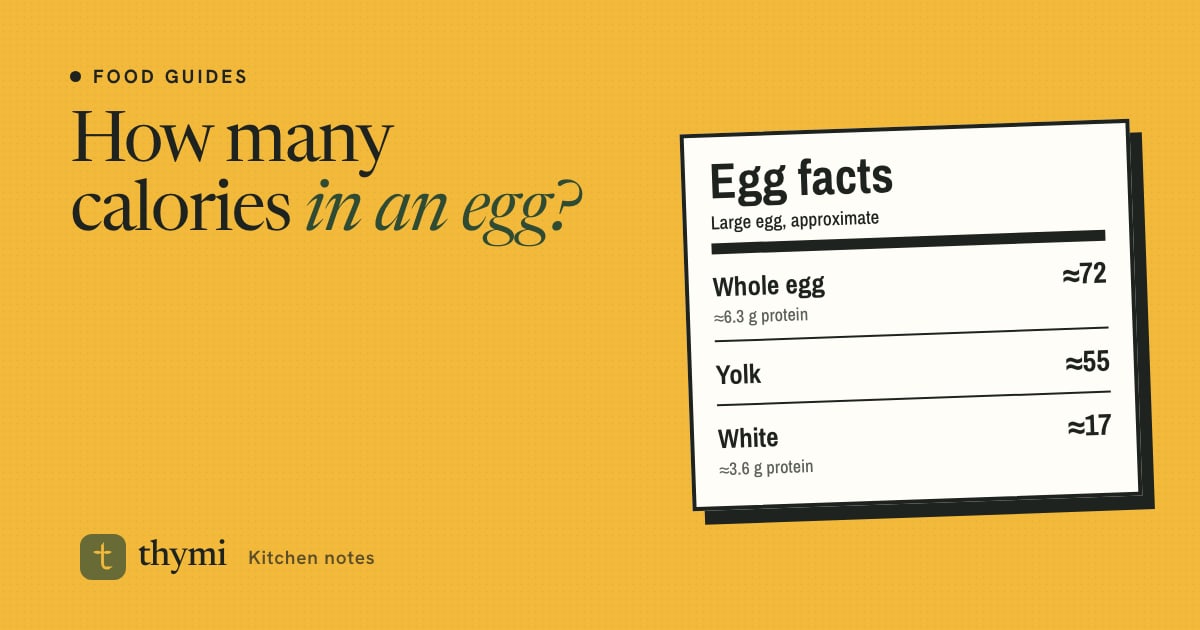
A large egg has about 72 calories, 6.3 g of protein and 4.8 g of fat; a medium egg about 63 calories and an extra-large egg about 80. The yolk holds most of the calories (≈ 55) and the white holds most of the protein for its calories (≈ 17 kcal, ≈ 3.6 g protein). Boiled and poached eggs stay close to those numbers; fried eggs, scrambled eggs and omelettes add whatever butter or oil goes into the pan.
Egg calories by size
Egg size is the biggest factor in an egg's calories, because the composition of eggs is very consistent. The figures below are approximate USDA values for whole, raw chicken eggs without the shell. US size names are used here; sizes are defined differently in other countries, so if you are unsure, weighing the egg is the most reliable way to check.
| Egg size (US) | Weight without shell | Calories | Protein |
|---|---|---|---|
| Small | ≈ 38 g (1.3 oz) | ≈ 54 | ≈ 4.8 g |
| Medium | ≈ 44 g (1.6 oz) | ≈ 63 | ≈ 5.5 g |
| Large | ≈ 50 g (1.8 oz) | ≈ 72 | ≈ 6.3 g |
| Extra-large | ≈ 56 g (2 oz) | ≈ 80 | ≈ 7 g |
| Jumbo | ≈ 63 g (2.2 oz) | ≈ 90 | ≈ 7.9 g |
A quick rule of thumb: whole egg works out to roughly 1.4–1.45 kcal per gram without the shell. If you crack an egg into a bowl on a kitchen scale and it reads 55 g, it is about 80 kcal.
Most recipes and nutrition apps assume a large egg unless they say otherwise. If you usually buy medium eggs, logging them as large slightly overestimates each one, by about 9 kcal. That is small for one egg, but it adds up if you eat several a day.
Calories in egg yolk vs egg white
The yolk and the white are very different. The yolk is about a third of the egg's weight but holds almost all of the fat and most of the calories. The white is mostly water and protein.
| Part of one large egg | Calories | Protein | Fat |
|---|---|---|---|
| Whole egg | ≈ 72 | ≈ 6.3 g | ≈ 4.8 g |
| Yolk only | ≈ 55 | ≈ 2.7 g | ≈ 4.5 g |
| White only | ≈ 17 | ≈ 3.6 g | ≈ 0 g |
That is why egg whites are popular with people trying to add protein for few calories: four egg whites give about 14 g of protein for roughly 70 kcal. Cartons of liquid egg whites are similar, but check the label for the serving size.
The yolk is not something to avoid, though. It carries the egg's fat along with most of its vitamins and minerals, including vitamins A, D and B12 and choline, and it is what makes eggs rich and satisfying. Many people find a mix works well: one or two whole eggs plus a couple of extra whites gives more protein without many extra calories.
Good to know: A large egg has about 185 mg of cholesterol, all of it in the yolk. If your doctor has advised you to limit dietary cholesterol or saturated fat, ask how many whole eggs fit your plan. Egg whites contain no cholesterol.
Calories in boiled, fried and scrambled eggs
Cooking an egg barely changes its own calories. What changes the number is the fat, milk, cheese or mayonnaise that goes in with it. One teaspoon of oil is about 40 kcal and one teaspoon of butter about 34 kcal, and both can easily add half as much again to the egg.
| One large egg, cooked as | Calories (approx.) | What is added |
|---|---|---|
| Boiled (soft or hard) | ≈ 72–78 | Nothing |
| Poached | ≈ 72 | Nothing |
| Fried in 1 tsp butter | ≈ 95–105 | Most of the butter |
| Fried in 1 tsp oil | ≈ 100–110 | Most of the oil |
| Scrambled with 1 tsp butter and 1 tbsp milk | ≈ 110–115 | Butter and milk |
| Fried in 1 tbsp oil (generous restaurant style) | ≈ 150–190 | Much of the oil |
| Egg salad: 1 egg + 1 tbsp mayonnaise | ≈ 165 | Mayonnaise (≈ 94 kcal per tbsp) |
You may see a hard-boiled large egg listed at about 78 kcal rather than 72. That small difference comes from separate reference entries in the database, not from boiling adding calories. For everyday tracking, either is fine.
Calories in a boiled egg
A boiled egg is one of the simplest foods to log accurately: there is nothing added, so a large boiled egg is about 72–78 kcal and 6.3 g of protein, whether soft or hard. Two boiled eggs make a portable snack of about 145–155 kcal with roughly 12.5 g of protein.
Calories in a fried egg
The fried egg's number depends on the pan. A non-stick pan with a light spray of oil keeps it close to a boiled egg. A teaspoon of oil or butter adds roughly 30–40 kcal, depending on how much stays behind in the pan. Eggs cooked on a restaurant griddle or basted in butter can carry much more. Our guide to tracking calories when eating out has tips for estimating that hidden fat.
Omelette calories: worked examples
An omelette is just eggs plus fat plus fillings, so you can add it up yourself. Here are some common versions with approximate totals:
| Omelette | Calories | Protein |
|---|---|---|
| Plain, 2 large eggs, 1 tsp oil | ≈ 185 | ≈ 12.5 g |
| Veggie, 2 large eggs, onion, pepper and spinach, 1 tsp oil | ≈ 200–210 | ≈ 13–14 g |
| Masala omelette, 2 large eggs, onion, tomato, chilli, 1–2 tsp oil | ≈ 200–250 | ≈ 13 g |
| Egg bhurji, 2 large eggs, onion and tomato, 2 tsp oil | ≈ 240–260 | ≈ 13 g |
| Cheese, 3 large eggs, 1 oz (28 g) cheddar, 1 tsp butter | ≈ 365 | ≈ 26 g |
| Egg-white, 4 large egg whites, vegetables, cooking spray | ≈ 85–100 | ≈ 14–15 g |
How the cheese omelette adds up
- 3 large eggs: 3 × 72 ≈ 216 kcal and ≈ 19 g protein
- 1 oz (28 g) cheddar: ≈ 115 kcal and ≈ 7 g protein
- 1 tsp butter: ≈ 34 kcal
- Total: ≈ 365 kcal and ≈ 26 g protein
Swap one whole egg for two egg whites and use a non-stick pan, and the same omelette drops to roughly 300 kcal with slightly more protein. Neither version is better; it depends on what fits your day.
Tip: The fat in the pan is the easiest part to forget when you log eggs, and it often adds more calories than an extra egg would. Measure it with a teaspoon for a week and you will get a feel for your usual amount. Untracked cooking fat is one of the most common calorie counting mistakes.
How much protein is in an egg?
A large egg has about 6.3 g of protein: roughly 3.6 g in the white and 2.7 g in the yolk. Egg protein is a complete protein, meaning it contains all the essential amino acids your body needs from food.
Per calorie, eggs are a good source: a whole egg gives about 8–9 g of protein per 100 kcal, and egg whites about 21 g per 100 kcal. For comparison, many people aim for roughly 20–30 g of protein at a meal. That would take three or four whole eggs, so eggs often work best combined with something else, like Greek yogurt, milk, cottage cheese, paneer, beans or extra egg whites.
- 2 large eggs: ≈ 12.5 g protein, ≈ 145 kcal
- 3 large eggs: ≈ 19 g protein, ≈ 216 kcal
- 2 large eggs + 3 egg whites: ≈ 23 g protein, ≈ 195 kcal
For a full picture of how much protein you might need in a day, see our guide to how much protein you need a day.
Fitting eggs into your day
Eggs are cheap, quick to cook and easy to portion, which makes them useful whatever your goal. A few ways people use them:
- Breakfast anchor. Two or three eggs with toast, a roti or vegetables. For more ideas, see our list of high protein breakfasts.
- Snack. A couple of boiled eggs keep well in the fridge and travel easily.
- Protein top-up. A fried or poached egg on a rice bowl, salad, noodles or leftover dal and rice adds about 6 g of protein.
- Dinner. Shakshuka, egg curry or a frittata full of vegetables.
Egg curry and other mixed dishes
In dishes like egg curry, anda bhurji or shakshuka, the eggs are usually the easy part to count. The sauce is where the range comes from: an onion-tomato gravy cooked with a tablespoon of oil for the whole pan is very different from one finished with cream, butter or coconut milk. A home-style egg curry with two eggs and a cup of gravy can land anywhere from roughly 250 to 400 kcal. The most accurate approach is to add up the whole pan (eggs, oil, onions, tomatoes, any cream) and divide by the number of portions.
How many eggs can you eat a day?
There is no single number that applies to everyone. For many healthy adults, eggs can be part of a balanced diet, and the bigger picture of what you eat across the week matters more than any one food. If you have high cholesterol, diabetes or heart disease, or have been given specific advice about your diet, ask your doctor or a registered dietitian how many eggs suit you.
If you are trying to lose weight, eggs can help because a protein-rich meal tends to feel more filling. But no single food causes weight loss; your total calories over time do. Eggs simply make it easier to build meals that are satisfying for their calories.
How to log eggs accurately
- Count the eggs and note the size. If you are not sure, large is a sensible default.
- Log the cooking fat separately if your app or diary allows it, or choose an entry that matches the method, such as "fried in butter".
- Add fillings and toppings: cheese, milk, mayonnaise, sauces and the bread or roti on the side.
- For eggs eaten out, assume some extra fat unless they were boiled or poached.
Thymi can handle this for you: type "two-egg masala omelette with 2 tsp oil", scan the barcode on a carton of egg whites, or take a photo of your plate, and it estimates the calories and protein. If you used more butter than the photo suggests, "Fix it" lets you adjust in plain words.
Frequently asked questions
How many calories are in a large egg?
A large egg (about 50 g without the shell) has roughly 72 calories, 6.3 g of protein and 4.8 g of fat. A medium egg has about 63 calories and an extra-large egg about 80.
How many calories are in a boiled egg?
A large boiled egg has about 72–78 calories and 6.3 g of protein. Boiling adds nothing, so a boiled egg has essentially the same calories as a raw egg of the same size.
How many calories are in an egg white?
The white of a large egg has about 17 calories and 3.6 g of protein, with almost no fat. The yolk has about 55 calories, so most of an egg's calories come from the yolk.
How much protein is in one egg?
A large egg has about 6.3 g of protein, with roughly 3.6 g in the white and 2.7 g in the yolk. A medium egg has about 5.5 g and an extra-large egg about 7 g.
How many calories are in a fried egg?
A large egg fried in a teaspoon of oil or butter is roughly 95–110 calories, depending on how much fat stays in the pan. Fried with a generous tablespoon of oil, it can be 150 calories or more.
How many calories are in a 2-egg omelette?
A plain 2-egg omelette made with large eggs and a teaspoon of oil is about 185 calories. Vegetables add a little, while cheese adds roughly 115 calories per ounce (28 g) of cheddar.
This article is general information for healthy adults, not medical or nutritional advice. Talk to a doctor or registered dietitian before changing how you eat, especially if you are pregnant or breastfeeding, have or have had an eating disorder, have a medical condition, or take medication.