Meal ideas
High Protein Breakfast: 12 Ideas With Protein and Calories
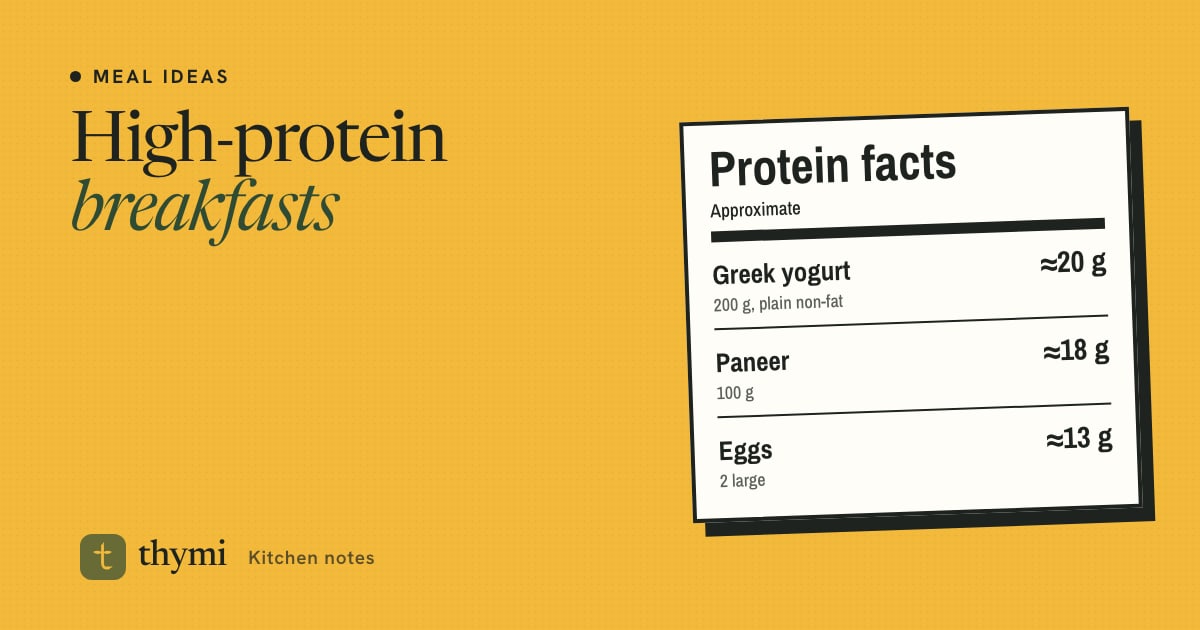
A high protein breakfast usually means roughly 20–30 g of protein in your first meal, which is easy to reach with eggs, Greek yogurt, cottage cheese, tofu, paneer or a lentil-based dish like moong dal chilla. Below are 12 ideas, Indian and Western, with approximate protein and calories for a stated portion, plus a simple way to build your own: a protein anchor, something with fiber, and a piece of fruit.
What counts as a high protein breakfast?
There is no official definition, but many people use about 20–30 g of protein as a practical target for a breakfast that feels substantial. That is roughly a quarter of a daily target of 80–120 g, a range that suits many active adults. If you are not sure what your own daily number should be, our guide to how much protein you need a day walks through the maths.
Why bother with breakfast specifically? A lot of typical breakfasts are built almost entirely on carbohydrate: toast with jam, a bowl of cereal, a plain paratha with tea. These can be perfectly enjoyable, but they often bring only 5–10 g of protein. That leaves lunch and dinner to do all the work, and a big protein target becomes hard to reach in two sittings. Moving 15–20 g of protein into the morning spreads the load and, for many people, makes the late-morning snack urge a little quieter.
A high protein breakfast does not need to be big, expensive or full of supplements. Most of the ideas below use ordinary groceries and take 10 minutes or less.
12 high protein breakfast ideas (with numbers)
All values are approximate. They depend on brands, exact portions and how much oil or butter you use, so check labels for packaged foods and treat this as a starting point rather than a precise chart.
| Breakfast (portion) | Protein | Calories |
|---|---|---|
| Scrambled eggs: 3 large eggs with 1 tsp butter, 1 slice whole-wheat toast | ≈ 23 g | ≈ 330 |
| Veggie omelette: 2 large eggs + 2 egg whites, vegetables, 1 tsp oil | ≈ 20 g | ≈ 240 |
| Greek yogurt bowl: 200 g (7 oz) plain non-fat Greek yogurt, ½ cup berries, 1 tbsp chia seeds | ≈ 22 g | ≈ 220 |
| Cottage cheese (2% fat, 1 cup) with 1 cup chopped fruit | ≈ 25 g | ≈ 255 |
| Overnight oats: 40 g (½ cup) rolled oats, 1 cup 2% milk, 100 g non-fat Greek yogurt | ≈ 23 g | ≈ 330 |
| Tofu scramble: 150 g (5.3 oz) firm tofu, vegetables, 1 tsp oil | ≈ 23–26 g | ≈ 240–280 |
| Protein smoothie: 1 scoop whey or plant protein, 1 cup 2% milk, 1 banana | ≈ 29–34 g* | ≈ 330–360* |
| Peanut butter toast: 2 slices whole-wheat toast, 2 tbsp peanut butter, 1 cup milk on the side | ≈ 23 g | ≈ 435–500 |
| Paneer bhurji: 100 g (3.5 oz) paneer, onion and tomato, 1 tsp oil, 1 medium roti | ≈ 21 g | ≈ 440–510 |
| Paneer-stuffed besan chilla: 2 chillas from ≈ 50 g besan, 50 g paneer, 1–2 tsp oil | ≈ 20 g | ≈ 380–440 |
| Moong dal chilla: 2 chillas from ≈ 60 g dry split moong dal, 1–2 tsp oil, ½ cup plain curd | ≈ 19 g | ≈ 325–365 |
| Poha with peanuts and curd: 1 cup cooked poha, 1 tbsp peanuts, 1 cup plain curd | ≈ 14 g | ≈ 380–450 |
*Protein powders vary a lot. A scoop commonly provides around 20–25 g of protein and 100–130 kcal, but read your own tub's label and adjust.
Two patterns stand out. First, eggs, Greek yogurt, cottage cheese and tofu give a lot of protein for relatively few calories. Second, the Indian dishes land in a similar protein range but often with more calories, mostly because of paneer's fat and the oil in the pan. That is not a problem; it simply means those breakfasts are more filling meals in their own right, and portions matter a bit more.
Eggs show up twice in the table for a reason: they are cheap, quick and easy to scale. Our breakdown of calories in eggs covers how size and cooking method change the numbers.
Indian high protein breakfast ideas
Traditional Indian breakfasts already include some excellent protein sources. Lentils, chickpea flour, paneer and curd are all staples, and small tweaks can push a familiar dish into the 15–25 g range.
- Besan chilla. Chickpea flour (besan) has roughly 22 g of protein per 100 g dry, so two chillas made from about 50 g of besan give about 11 g on their own. Stuffing them with crumbled paneer, or serving them with thick curd, brings the total to around 20 g.
- Moong dal chilla. Soaked and ground split moong dal makes a light, savory pancake. About 60 g of dry dal gives roughly 14 g of protein before you add anything else. A bowl of curd or a little grated paneer on top adds more.
- Paneer bhurji. Paneer has about 18 g of protein per 100 g, though it is also fairly rich (≈ 265–320 kcal per 100 g, depending on the fat level). Low-fat paneer, if you can find it, keeps the protein and trims calories.
- Poha with peanuts and curd. Poha on its own is mostly carbohydrate. Peanuts add a few grams of protein and a satisfying crunch, and a cup of curd on the side roughly doubles the total. Swapping regular curd for hung curd or plain Greek yogurt raises it further.
- Egg bhurji or masala omelette. For people who eat eggs, a two-egg masala omelette with onion, tomato and green chilli gives about 12–13 g of protein; add a third egg or a slice of paneer to reach 20 g.
Tip: Most of the calorie difference between home versions of the same dish comes from oil or ghee. Measuring the oil once with a teaspoon, instead of pouring from the bottle, tells you what your usual chilla or bhurji really contains. Our guide to calories in Indian food has more on this.
Vegetarian high protein breakfast options
None of the twelve ideas above contain meat, and ten of them are egg-free. For lacto-vegetarians, dairy does a lot of the heavy lifting: Greek yogurt, cottage cheese, paneer, curd and milk. For vegans, the most protein-dense breakfast staples are tofu, soy milk, soy yogurt, tempeh and lentil- or chickpea-flour pancakes.
A few easy vegetarian upgrades:
- Make overnight oats with milk or soy milk instead of water, and stir in Greek or soy yogurt.
- Add a spoon of nut butter or a sprinkle of seeds (chia, hemp, pumpkin) to porridge.
- Use crumbled firm tofu exactly as you would scrambled eggs, with turmeric, onion and black salt for an egg-like flavor.
- Have a glass of milk or soy milk alongside a lower-protein breakfast like poha or upma.
Our full list of vegetarian protein sources has numbers for more than 15 foods if you want to plan the rest of the day too.
How to build a high protein breakfast: a simple formula
Rather than memorising recipes, it helps to think of breakfast in three parts:
- A protein anchor (15–30 g). Eggs, Greek yogurt, cottage cheese, tofu, paneer, a lentil or besan batter, or a glass of milk plus something else. Choose this first.
- Something with fiber. Oats, whole-grain toast, a roti, vegetables in the pan, chia seeds or the lentils themselves. Fiber adds staying power and helps toward a daily target of roughly 25–38 g; our fiber guide explains where those numbers come from.
- Fruit (or vegetables). Berries on yogurt, a banana in a smoothie, a sliced apple on the side, or tomatoes and spinach folded into eggs. This adds volume, sweetness and micronutrients for relatively few calories.
A little fat, like butter on toast or oil in the pan, is completely fine and makes food taste good. It is also where calories climb fastest, so it is the one ingredient worth measuring at first.
Worked example: upgrading toast and jam
Say your usual breakfast is two slices of white toast with butter and jam and a cup of milky tea. That is roughly 350 kcal and about 7 g of protein. Keeping the same feel, you could:
- Swap one slice of toast for two scrambled eggs: protein rises by about 10 g.
- Make the tea or coffee with a full cup of milk: about 8 g of protein from the milk alone.
- Add a small bowl of berries or a banana on the side.
The result is roughly 22–25 g of protein for about 450 kcal: around 100 kcal more than before, for about three times the protein.
Protein breakfast for weight loss
No breakfast causes weight loss by itself. Losing weight comes down to eating fewer calories than you use over time, and the size of your calorie deficit matters more than any single meal. What a protein breakfast can do is make a deficit easier to live with.
- Fullness. Many people find a protein-rich breakfast keeps them satisfied for longer than one of the same calories made mostly of refined carbohydrate.
- Muscle. When you eat less, getting enough protein across the day, together with strength training, helps you keep muscle while losing fat.
- Easier totals. Hitting 25 g at breakfast makes a daily target of 100 g or more feel much more achievable.
For weight loss specifically, the lower-calorie options in the table are worth a look: a Greek yogurt bowl, cottage cheese with fruit, or an egg-and-egg-white omelette each give about 20–25 g of protein for roughly 220–260 kcal. If you prefer a heartier breakfast like paneer bhurji, that works too; just account for it, and perhaps keep lunch a little lighter.
Good to know: Skipping breakfast is also a valid choice. If you are not hungry in the morning, there is no need to force a meal. The total protein and calories across your day matter far more than whether the first meal is at 7 am or noon.
Make-ahead and on-the-go options
Busy mornings are where good intentions disappear. A little preparation on the weekend helps:
- Boil a batch of eggs. They keep in the fridge in their shells for up to a week, and two of them are about 12–13 g of protein.
- Portion overnight oats into jars. Three or four jars made at once cover most of the week.
- Make chilla batter ahead. Moong dal batter keeps for a day or two in the fridge, so breakfast becomes a five-minute job.
- Bake egg muffins. Whisk eggs with chopped vegetables and a little cheese, bake in a muffin tin, and reheat.
- Keep single-serve Greek yogurts. One pot plus a piece of fruit is a complete grab-and-go breakfast.
Checking your breakfast protein
You do not need to log every meal forever. Tracking breakfast for a week or two is often enough to see whether your mornings are light on protein and which swaps help most. After that, you can rotate a handful of breakfasts you already know the numbers for.
If you do track, Thymi makes the morning part quick: snap a photo of your plate, scan the yogurt's barcode, or type something like "two-egg masala omelette and one roti", and it estimates protein and calories and fills your protein gauge for the day.
Frequently asked questions
What is a good high protein breakfast?
A good high protein breakfast gives roughly 20–30 g of protein. Easy examples are three scrambled eggs with toast, 200 g of plain Greek yogurt with berries and chia seeds, a cup of cottage cheese with fruit, a tofu scramble, or paneer bhurji with a roti.
How much protein should I eat for breakfast?
Many people aim for about 20–30 g at breakfast, which is roughly a quarter of a daily target of 80–120 g. The right amount depends on your total daily target and how many meals you eat, so there is no single correct number.
What is a vegetarian high protein breakfast?
Greek yogurt bowls, cottage cheese with fruit, paneer bhurji, paneer-stuffed besan chilla, moong dal chilla, tofu scramble and overnight oats made with milk and yogurt all give roughly 18–25 g of protein in a typical portion.
Is a high protein breakfast good for weight loss?
It can help. Protein-rich breakfasts tend to be filling, which can make eating in a calorie deficit easier, and enough protein supports muscle while you lose weight. Weight loss itself still depends on your total calories over time.
How can I get 30 g of protein at breakfast?
Combine two protein sources. For example, a three-egg omelette with a glass of milk, 200 g of Greek yogurt with a tablespoon of peanut butter, or a protein smoothie made with milk and a scoop of protein powder each reach roughly 30 g.
This article is general information for healthy adults, not medical or nutritional advice. Talk to a doctor or registered dietitian before changing how you eat, especially if you are pregnant or breastfeeding, have or have had an eating disorder, have a medical condition, or take medication.