Meal planning
High Protein Meal Plan: A 7-Day Menu for Weight Loss
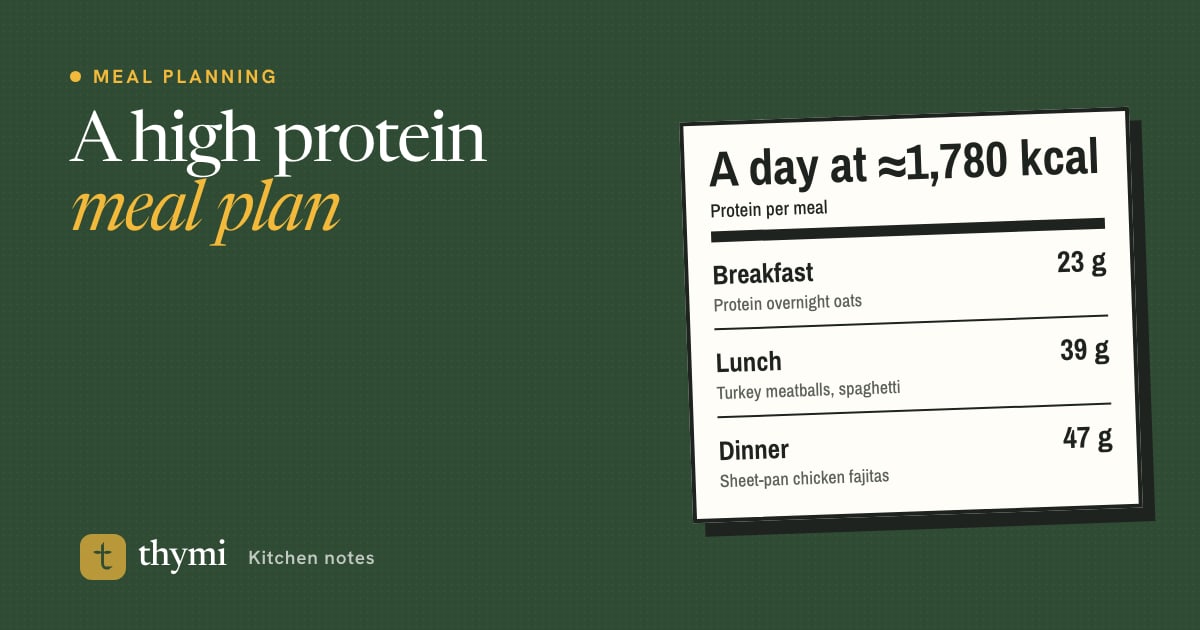
A high protein meal plan for weight loss gives most active adults about 1.2 to 1.6 g of protein per kilogram of body weight (roughly 0.55 to 0.75 g per pound), spread across three meals and one or two snacks, inside a moderate calorie deficit. The 7-day plan below averages about 1,780 kcal and 142 g of protein a day using everyday foods, with vegetarian swaps and a full grocery list.
How much protein do you need to lose weight?
Start with the baseline. The Recommended Dietary Allowance used in the Dietary Guidelines for Americans is 0.8 g of protein per kilogram of body weight a day, and the UK reference nutrient intake is a similar 0.75 g/kg. Those figures are set to prevent deficiency in most healthy adults. They are a floor, not a target for someone who is training and eating less.
For active people and for weight loss, a practical range many dietitians and sports nutrition bodies use is 1.2 to 1.6 g per kilogram. The International Society of Sports Nutrition (ISSN) position stand on protein and exercise goes a little higher, suggesting about 1.4 to 2.0 g/kg a day for most people who exercise regularly. Going above about 1.6 g/kg is unlikely to hurt a healthy person, but for most people the extra benefit is small.
| Body weight | 1.2 g/kg | 1.6 g/kg |
|---|---|---|
| 130 lb (59 kg) | ≈ 71 g | ≈ 94 g |
| 150 lb (68 kg) | ≈ 82 g | ≈ 109 g |
| 170 lb (77 kg) | ≈ 92 g | ≈ 123 g |
| 190 lb (86 kg) | ≈ 103 g | ≈ 138 g |
| 210 lb (95 kg) | ≈ 114 g | ≈ 152 g |
| 230 lb (104 kg) | ≈ 125 g | ≈ 166 g |
If you are carrying a lot of extra weight, base the calculation on a realistic goal weight instead of your current weight; otherwise the number can get unhelpfully high. The 140 g in this plan fits someone of roughly 190 lb (86 kg) at the top of the range, or up to about 255 lb (115 kg) at the bottom. If your number is lower, shrink the protein portions a little and add vegetables. For a step-by-step calculation, see how much protein you need a day.
Good to know: if you have kidney disease or reduced kidney function, liver disease, or another medical condition, or you are pregnant, do not raise your protein intake without talking to your doctor or a registered dietitian first.
Why a high protein diet helps with weight loss
Protein does not melt fat on its own. Weight loss still comes down to eating fewer calories than you burn, as explained in our guide to the calorie deficit. What protein does is make that deficit easier to live with and help you keep the right kind of weight:
- It keeps you fuller. Protein is consistently rated as the most filling macronutrient, so protein-led meals tend to curb snacking. Pair it with fiber and volume, as in our list of foods that keep you full.
- It protects muscle. In a calorie deficit your body can lose muscle as well as fat. Enough protein, combined with strength training two or three times a week, helps you keep it.
- It costs more to digest. Roughly 20 to 30% of the calories in protein are used up digesting it, compared with about 5 to 10% for carbs and less for fat. It is a modest effect, but it helps.
How this high protein meal plan is built
- About 1,800 calories a day. For someone who maintains at around 2,300 to 2,400 calories, that is a deficit of about 500 a day. If your maintenance is lower or higher, scale the portions; our TDEE guide explains how to estimate it.
- About 140 g of protein, which is roughly 31% of calories.
- Protein at every eating occasion: 23 to 51 g per meal and 23 to 35 g across snacks. The ISSN suggests spreading protein over the day in doses of about 20 to 40 g, and that is easier to stick to than one enormous dinner.
- Mostly lean proteins (chicken breast, fish, shrimp, Greek yogurt, cottage cheese, eggs, tofu, lentils), with fats measured by the teaspoon.
- Cook once, eat twice. Day 2's meatballs and Day 3's fajitas each cover the next day's lunch.
Numbers are approximate, based on generic foods in USDA FoodData Central. Meat and fish weights are cooked unless marked raw.
The 7-day high protein meal plan
| Day | Breakfast | Lunch | Dinner | Snacks | ≈ kcal | ≈ protein |
|---|---|---|---|---|---|---|
| Day 1 | Yogurt bowl: 250 g (9 oz) nonfat Greek yogurt, ¼ cup granola, ½ cup berries, 1 tbsp chia seeds ≈ 375 kcal · 31 g | Chicken hummus wrap: 120 g (4.2 oz) chicken breast, medium whole-wheat tortilla, 2 tbsp hummus, cucumber, peppers and spinach; an apple ≈ 520 kcal · 44 g | Baked salmon, 140 g (5 oz), ¾ cup cooked quinoa, 1½ cups asparagus roasted with 1 tsp olive oil ≈ 540 kcal · 40 g | ⅔ cup (150 g) 2% cottage cheese with cucumber and black pepper; a banana with 1 tbsp peanut butter ≈ 345 kcal · 23 g | 1,780 | 138 g |
| Day 2 | 2 eggs scrambled with ½ cup liquid egg whites and spinach in 1 tsp butter, 1 slice whole-wheat toast, ½ cup berries ≈ 360 kcal · 30 g | Tuna and white bean salad: 1 can tuna in water, ½ cup cannellini beans, cherry tomatoes, red onion, arugula, 1 tbsp olive oil and lemon; small whole-wheat pita ≈ 475 kcal · 42 g | Turkey meatballs (140 g / 5 oz raw 93% lean turkey) in ½ cup marinara over 1 cup whole-wheat spaghetti, 1 tbsp Parmesan; side salad with 1 tsp olive oil. Cook two portions. ≈ 535 kcal · 39 g | Shake: 1 scoop whey with 1 cup skim milk; an apple; ½ oz (14 g) almonds ≈ 380 kcal · 35 g | 1,750 | 146 g |
| Day 3 | Overnight oats: ½ cup oats, ½ scoop whey, ¾ cup skim milk, ½ cup berries, 1 tsp honey ≈ 330 kcal · 23 g | Leftover turkey meatballs and spaghetti ≈ 535 kcal · 39 g | Sheet-pan chicken fajitas: 130 g (4.6 oz) chicken breast, 1½ cups peppers and onions with 2 tsp oil, 2 corn tortillas, 2 tbsp Greek yogurt, salsa. Cook two portions. ≈ 490 kcal · 47 g | 2 hard-boiled eggs with baby carrots; 170 g (6 oz) 2% Greek yogurt with 1 tsp honey and ½ oz (14 g) walnuts ≈ 420 kcal · 32 g | 1,775 | 141 g |
| Day 4 | Cottage cheese toast: 2 slices whole-wheat toast, ½ cup 2% cottage cheese, sliced tomato; 1 egg fried with spray oil ≈ 335 kcal · 26 g | Leftover chicken fajitas ≈ 490 kcal · 47 g | Shrimp stir-fry: 150 g (5.3 oz) shrimp, 2 cups broccoli and snap peas, 2 tsp oil, soy-ginger-garlic sauce, ¾ cup jasmine rice ≈ 500 kcal · 45 g | 1 cup shelled edamame and a clementine; 1 oz (28 g) cheddar with an apple ≈ 435 kcal · 25 g | 1,760 | 143 g |
| Day 5 | Berry smoothie: 1 scoop whey, 1 cup unsweetened soy milk, 1 cup frozen berries, ½ banana, 1 tbsp ground flaxseed ≈ 360 kcal · 34 g | Lentil salad: 1 cup cooked lentils, roasted peppers and zucchini, arugula, 1 oz (28 g) feta, balsamic dressing; 1 hard-boiled egg ≈ 525 kcal · 30 g | Sirloin steak, 140 g (5 oz) trimmed; baked potato with 2 tbsp Greek yogurt and chives; green beans with 1 tsp butter ≈ 550 kcal · 50 g | 1 cup 2% cottage cheese with ½ cup pineapple; a rice cake with 1 tbsp peanut butter ≈ 350 kcal · 29 g | 1,785 | 143 g |
| Day 6 | Protein pancakes: blend ⅓ cup oats, 1 egg, ½ cup cottage cheese and ½ banana, cook in 1 tsp butter; top with berries, 2 tbsp Greek yogurt and 1 tbsp maple syrup ≈ 460 kcal · 25 g | Turkey and Swiss on rye: 5 oz (140 g) deli turkey, 1 slice Swiss, mustard, lettuce, tomato; 1 cup vegetable soup; baby carrots with 2 tbsp hummus ≈ 605 kcal · 42 g | Baked cod, 170 g (6 oz), with lemon; 200 g (7 oz) baby potatoes roasted with 2 tsp oil; ½ cup peas ≈ 475 kcal · 47 g | 1 oz (28 g) beef jerky; 170 g (6 oz) nonfat Greek yogurt or skyr with ½ cup cherries ≈ 260 kcal · 26 g | 1,800 | 140 g |
| Day 7 | 2 eggs scrambled with 2 oz (56 g) smoked salmon, 1 slice rye toast, 1 tsp butter ≈ 330 kcal · 26 g | Tofu and chickpea bowl: 150 g (5.3 oz) baked extra-firm tofu, ½ cup chickpeas, ¾ cup brown rice, roasted vegetables, 1 tbsp tahini-lemon dressing ≈ 595 kcal · 34 g | Roast chicken breast, 150 g (5.3 oz); carrots and parsnips roasted with 1 tsp oil; steamed greens; ¼ cup gravy ≈ 460 kcal · 51 g | Shake: 1 scoop whey with 1 cup skim milk; an apple with 1 tbsp almond butter ≈ 400 kcal · 35 g | 1,785 | 146 g |
That averages about 1,780 kcal and 142 g of protein a day. Any day can be moved or repeated; what matters is the weekly average.
Tip: breakfast is where most people fall short on protein. If yours is usually toast or cereal, start there. Our high protein breakfast ideas list a dozen options with their numbers.
The best protein foods per calorie
When calories are limited, it helps to know which foods give you the most protein for the fewest calories. These are approximate figures per 100 kcal, from USDA FoodData Central values for generic foods:
| Food | ≈ protein per 100 kcal |
|---|---|
| Shrimp, cooked | 24 g |
| Cod or other white fish, cooked | 22 g |
| Egg whites | 21 g |
| Whey protein powder | 20 g |
| Chicken breast, cooked | 19 g |
| Nonfat Greek yogurt or skyr | 17 g |
| 2% cottage cheese | 14 g |
| 93% lean ground beef or turkey, cooked | 12–13 g |
| Firm tofu | 12 g |
| Salmon, cooked | 11 g |
| Whole eggs | 9 g |
| Lentils, cooked | 8 g |
| Peanut butter or almonds | 4 g |
This does not make the lower foods bad. Salmon and eggs bring healthy fats and other nutrients, and lentils bring fiber. It simply explains why the plan pairs a lean protein with each meal and treats nut butters as a fat rather than a protein source.
Vegetarian swaps
Most of this plan already includes eggs, dairy, lentils, edamame and tofu. To make the whole week vegetarian, use these swaps. Plant proteins usually carry more carbohydrate, so expect totals to land 10 to 20 g lower unless you add an extra serving of Greek yogurt, cottage cheese or soy.
| Instead of | Try | ≈ protein |
|---|---|---|
| Chicken breast, 120 g (≈ 37 g) | Tempeh, 120 g (4.2 oz), or extra-firm tofu, 200 g (7 oz) | ≈ 24 g |
| Salmon, 140 g (≈ 30 g) | Tempeh, 150 g (5.3 oz), pan-fried | ≈ 30 g |
| Canned tuna (≈ 30 g) | ½ cup chickpeas mashed with 150 g (5.3 oz) Greek yogurt and lemon | ≈ 22 g |
| Turkey meatballs (≈ 26 g) | Soy mince or plant-based mince, about 120 g prepared | ≈ 20–25 g |
| Shrimp, 150 g (≈ 36 g) | 1 cup shelled edamame plus 100 g (3.5 oz) firm tofu | ≈ 30 g |
| Sirloin steak, 140 g (≈ 42 g) | Seitan, about 120 g (4.2 oz); check the label | ≈ 25–30 g |
| Cod, 170 g (≈ 39 g) | Firm tofu, 200 g (7 oz), baked with lemon and herbs | ≈ 30–35 g |
| Deli turkey (≈ 23 g) | Egg salad made with 2 eggs and Greek yogurt, plus the Swiss cheese | ≈ 20 g |
| Beef jerky (≈ 9 g) | Roasted chickpeas or a soy-based jerky | ≈ 6–10 g |
| Whey protein | Soy or pea protein powder (also vegan) | ≈ 20–25 g |
For a fuller list with numbers per serving, see vegetarian protein sources.
The grocery list
This covers the full week for one person, rounded to typical pack sizes. Freeze raw meat you will not cook within 1 to 2 days of buying it.
Meat, fish and eggs
- Chicken breast, about 1.6 lb (720 g) raw
- 93% lean ground turkey, 1 lb (450 g); you need about 10 oz (280 g), so freeze the rest
- Salmon fillet, about 6 oz (170 g) raw; cod, about 8 oz (225 g) raw; shrimp, about 7 oz (200 g) raw or frozen
- Sirloin steak, about 7 oz (200 g) raw
- Canned tuna in water, 1 can; smoked salmon, 2 oz (56 g); sliced deli turkey, 5 oz (140 g); beef jerky, 1 oz
- Eggs, 1 dozen; liquid egg whites, 1 small carton
Dairy and plant proteins
- Plain Greek yogurt, about 32 oz (900 g), nonfat or 2%
- 2% cottage cheese, 24 oz (680 g)
- Skim milk, 1 quart (1 liter); unsweetened soy milk, 1 carton
- Feta, Parmesan, a small block of cheddar, 1 slice of Swiss, butter
- Extra-firm tofu, 1 block; frozen shelled edamame; hummus, 1 small tub
- Whey protein powder (about 3½ scoops needed)
Grains and legumes
- Rolled oats, granola, quinoa, jasmine rice, brown rice, whole-wheat spaghetti, rice cakes
- Whole-wheat bread, rye bread, medium whole-wheat tortillas, corn tortillas, small whole-wheat pitas
- Cannellini beans, 1 can; chickpeas, 1 can; lentils, 1 can or pouch (or ½ cup dry)
Fruit and vegetables
- Berries (fresh or frozen), 2 bananas, 4 apples, clementines, cherries (fresh or frozen), pineapple, lemons
- Spinach, arugula, salad leaves, cucumber, cherry tomatoes, tomatoes, bell peppers, onions, red onion, zucchini
- Asparagus, broccoli, snap peas, green beans, frozen peas, baby carrots, carrots, parsnips, leafy greens
- 1 baking potato, 7 oz (200 g) baby potatoes, garlic, fresh ginger, chives, parsley
Pantry
- Olive oil, sesame or canola oil, cooking spray
- Peanut butter, almond butter, almonds, walnuts, chia seeds, ground flaxseed
- Honey, maple syrup, marinara sauce, salsa, soy sauce, tahini, balsamic vinegar, mustard, gravy granules, canned vegetable soup, fajita spices
If you want a staple list to reuse every week, see our healthy grocery list.
Tips to make a high protein diet work
- Anchor each meal on a protein. Pick it first, then add vegetables, a measured carb and a little fat.
- Batch cook two proteins a week. A tray of chicken and a pot of lentils or meatballs make most lunches automatic. Our meal prep for weight loss guide shows how.
- Keep ready-to-eat proteins at home: Greek yogurt, cottage cheese, hard-boiled eggs, canned fish and edamame rescue a day that has gone off plan.
- Lift weights. Protein protects muscle best when you give your muscles a reason to stay. Two or three full-body sessions a week is plenty to start.
- Eat your vegetables and drink water. High protein plans can crowd out fiber, so aim for vegetables at lunch and dinner and fruit with snacks.
- Use protein powder as a convenience, not a requirement. It is just food in a different form.
- Review after two to three weeks. If you are always hungry, add vegetables and a little more protein. If weight is not moving, check portions of oil, nut butter and grains first.
If you want a little more food, the 2,000 calorie meal plan follows the same structure with larger portions.
Frequently asked questions
How much protein should I eat to lose weight?
Many active adults losing weight do well on about 1.2 to 1.6 g of protein per kilogram of body weight a day, which is roughly 0.55 to 0.75 g per pound. For someone weighing 170 lb (77 kg), that is about 92 to 123 g a day. If you have a lot of weight to lose, base the calculation on a realistic goal weight.
Is a high protein meal plan safe?
For healthy adults, protein intakes of 1.2 to 1.6 g per kilogram are well within the range considered safe in mainstream guidance. If you have kidney disease or reduced kidney function, liver disease or another medical condition, or you are pregnant, talk to your doctor or a registered dietitian before increasing your protein.
Can I follow this high protein meal plan as a vegetarian?
Yes. The plan already uses eggs, dairy, lentils, edamame and tofu. Swap chicken and fish for tempeh, extra-firm tofu or seitan, and meat-based mince for soy mince. Plant-based days usually land 10 to 20 g lower in protein, so add an extra serving of Greek yogurt, cottage cheese or soy to close the gap.
Do I need protein powder to eat high protein?
No. Protein powder is a convenient way to add 20 to 25 g of protein, but you can reach the same total with Greek yogurt, cottage cheese, eggs, fish, chicken, tofu and legumes. In this plan you can replace each shake with 250 g of Greek yogurt or a cup of cottage cheese.
How much weight will I lose on a 1,800 calorie high protein diet?
It depends on how many calories you burn. If your maintenance is about 2,300 calories, eating 1,800 creates a deficit of about 500 calories a day, which often leads to roughly 1 lb (0.5 kg) of weight loss a week over time. Early weeks may show more because of water, and daily weight naturally goes up and down.
This article is general information for healthy adults, not medical or nutritional advice. Talk to a doctor or registered dietitian before changing how you eat, especially if you are pregnant or breastfeeding, have or have had an eating disorder, have a medical condition, or take medication.