Tracking
How to Count Calories in Homemade Food: Recipes, Pots and Leftovers
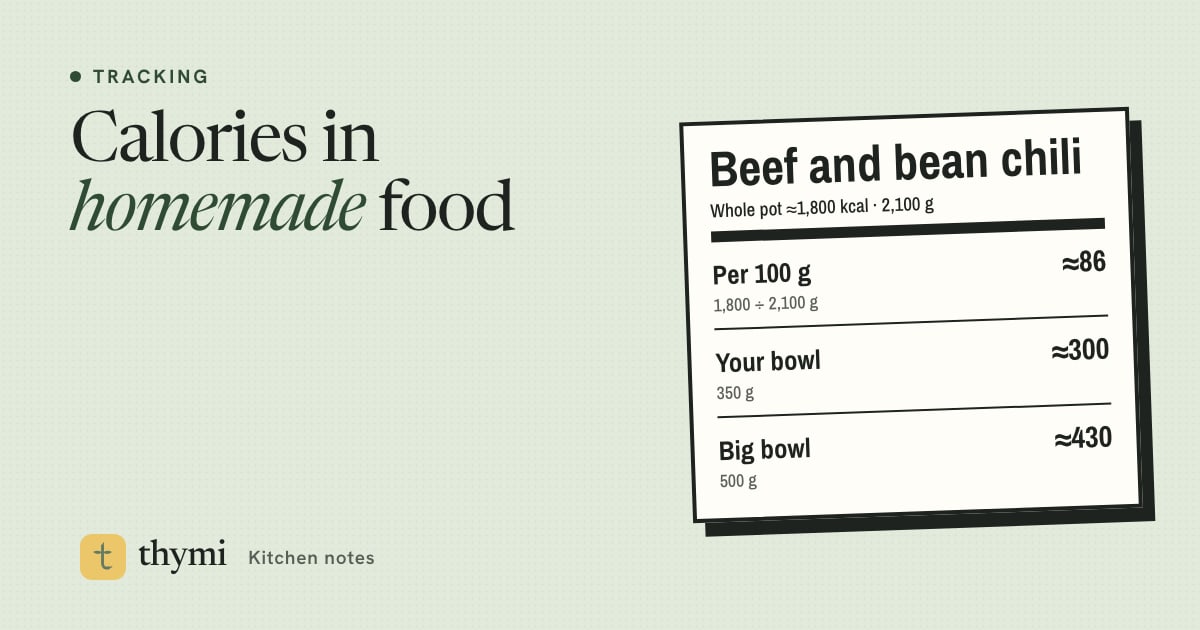
To count calories in homemade food, add up every ingredient that goes into the pot (including the oil), weigh the finished dish, and divide the total calories by that weight to get calories per gram. Then weigh or estimate your own portion and multiply. It takes about five minutes the first time, and once you save the dish you can log it in seconds every time you make it again.
Why homemade food is hard to log
A packaged sandwich has a label. Your Tuesday-night pasta doesn't, and a database entry called "spaghetti bolognese" can only guess at your recipe. Four things make home cooking tricky:
- Fat in the pan. Oil, butter and ghee carry about 9 kcal per gram, more than twice as much as protein or carbohydrate. A free pour of olive oil can be two or three tablespoons, 240–360 kcal before any food goes in, and it vanishes into the dish.
- Recipes made by eye. A handful of cheese, a "glug" of cream. Cooking by feel is part of the pleasure, but "one serving" then changes from week to week.
- One pot, shared unevenly. If a recipe "serves four" but one person takes seconds and another a small plate, dividing by four is only right on average.
- Sauces and finishing touches. Pesto, coconut milk, a knob of butter at the end, grated cheese. Small in volume, often large in calories.
None of this makes homemade food "worse" for tracking. You saw every ingredient go in; you just need a method that captures it.
The core method: log once, weigh the pot, divide
This works for anything cooked in one batch: chili, curry, stew, soup, a pasta bake.
- Weigh the empty pot (write it on tape under the pot, so you only do it once).
- Log each ingredient as it goes in, using raw or dry weights for meat, rice, pasta and lentils, and spoons for oil and butter.
- Add up the total calories (and protein, if you track it) for the whole pot.
- Weigh the finished pot and subtract the empty pot.
- Divide the total calories by the cooked weight. That gives you calories per gram, or per 100 g.
- Weigh your serving and multiply.
Why weigh the finished dish instead of dividing by servings? Because water comes and goes. A chili simmered an extra half hour gets denser; a soup topped up with stock gets thinner. The calories stay in the pot, and the cooked weight tracks the change automatically. The same idea explains why rice and chicken have different raw and cooked values, which we cover in our guides to calories in rice and calories in chicken breast.
Worked example: a pot of chili
Here is a beef and bean chili for about six people, with approximate values based on USDA data:
| Ingredient | Amount | Calories (approx.) |
|---|---|---|
| Lean ground beef (90% lean), raw | 500 g | ≈ 880 |
| Olive oil | 1 tbsp | ≈ 120 |
| Onions | 300 g (2 medium) | ≈ 120 |
| Bell peppers | 300 g (2) | ≈ 90 |
| Canned kidney beans, drained | 480 g (2 cans) | ≈ 410 |
| Canned chopped tomatoes | 800 g (2 cans) | ≈ 160 |
| Garlic, spices, stock | — | ≈ 20 |
| Whole pot | ≈ 1,800 |
The whole pot also has about 140 g of protein. After simmering, the chili weighs 2,100 g (pot subtracted). So:
- 1,800 kcal ÷ 2,100 g ≈ 86 kcal per 100 g, and about 6.6 g of protein per 100 g.
- Your 350 g bowl: ≈ 300 kcal and ≈ 23 g protein.
- A hungry teenager's 500 g bowl: ≈ 430 kcal.
- If you had simply divided by six, everyone would be logged at ≈ 300 kcal, which is right for you and about 130 kcal short for the teenager.
Log toppings separately, since everyone adds their own: a tablespoon of sour cream is about 30 kcal and 30 g of grated cheddar about 120.
Tip: Write the per-100 g number on the lid of the leftovers container with a marker. Tomorrow's lunch is then a 10-second log: weigh, multiply, done.
Quicker methods when you don't want to weigh
Weighing is the most accurate option, not the only good one. These get you close enough for most days.
Portion by bowl, cup or hand
Measure your usual bowl once: fill it to your normal level with water and pour that into a measuring cup. If it holds about 1½ cups, you know your portion from then on. For solid foods, your hand is a handy guide: a palm-sized piece of cooked meat or fish is roughly 85–115 g (3–4 oz), and a cupped handful of cooked rice or pasta is roughly ½ cup. Our guide to estimating portion sizes without a food scale has more of these.
Take a photo of the plate
A photo works well when you can see the parts: a sheet-pan dinner, tacos, a rice bowl. It is less reliable for dishes that hide their ingredients, like a creamy curry, and no camera can see the oil. Add a note such as "cooked in 2 tbsp olive oil for four" to get a better estimate. Our guide to logging food with a photo covers how to shoot a plate that is easy to read.
Describe it in a sentence
A sentence can carry a lot of detail: "a bowl of homemade beef chili, about 350 g, with a spoon of sour cream" or "two chicken tinga tacos on corn tortillas with avocado". Mention the fat and the portion size; those matter most.
Save it as a meal for next time
Most households cook the same ten to fifteen dishes on repeat. Work a dish out properly once, save it as a custom food or saved meal, and next time logging is a single tap.
Oil, butter and ghee: the calories in the pan
These are worth knowing by heart. Values are approximate, based on USDA data for level measuring spoons.
| Fat | 1 tsp (≈ 5 ml) | 1 tbsp (≈ 15 ml) |
|---|---|---|
| Olive oil | ≈ 40 kcal | ≈ 120 kcal |
| Vegetable, canola or sunflower oil | ≈ 40 kcal | ≈ 124 kcal |
| Coconut oil | ≈ 40 kcal | ≈ 120 kcal |
| Sesame oil | ≈ 40 kcal | ≈ 120 kcal |
| Butter | ≈ 34 kcal | ≈ 102 kcal |
| Ghee | ≈ 40 kcal | ≈ 115–125 kcal |
| Lard or bacon fat | ≈ 38 kcal | ≈ 115 kcal |
| Cooking spray, about a 1-second spray | ≈ 5–10 kcal (labels often round to 0) | |
Should you count all the oil, or only what the food absorbed? For curries, stews, sauces, soups and stir-fries, count all of it: it ends up in the dish. For roasting, count all of it unless a clear pool is left on the tray. For shallow frying, subtract only what you can pour back out. When in doubt, count it all, because untracked cooking fat is one of the most common calorie counting mistakes.
Tip: For one week, measure oil with a spoon instead of pouring from the bottle. You will learn what your "splash" really is. You may need less than you thought, or decide the extra tablespoon is worth it. Both are fine, as long as it's on the record.
Worked examples from five kitchens
Five everyday dishes, added up the same way. Your recipe will differ, so treat them as templates.
Spaghetti bolognese (serves 4)
Sauce: 400 g of 85% lean ground beef (≈ 860 kcal), 1 tbsp olive oil (≈ 120), 300 g onion, carrot and celery (≈ 100), a can of tomatoes (≈ 80), 2 tbsp tomato paste (≈ 25) and 100 ml red wine (≈ 85). That is about 1,270 kcal of sauce. Pasta: 320 g dry spaghetti, 80 g each (≈ 1,190). Parmesan: 10 g each (≈ 40 per plate). Per plate: ≈ 655 kcal and ≈ 34 g protein. Log pasta by dry weight, or weigh it cooked with a cooked entry, but don't mix the two.
Chicken and vegetable stir-fry (serves 2)
300 g raw chicken breast (≈ 360 kcal), 2 tbsp vegetable oil (≈ 250), 400 g broccoli, peppers and snap peas (≈ 120), 2 tbsp soy sauce, 1 tbsp oyster sauce, 1 tsp sesame oil, 1 tsp sugar and 1 tsp cornstarch (≈ 90 together). Total ≈ 820 kcal. Per person: ≈ 410 kcal and ≈ 40 g protein, or about 615 kcal with a cup of cooked rice. The oil is about a third of the calories.
Red lentil and coconut curry (serves 4)
250 g dry red lentils (≈ 895 kcal), 200 ml canned full-fat coconut milk (≈ 395), 1 tbsp ghee (≈ 120), an onion (≈ 60), 2 tomatoes (≈ 36), garlic, ginger and spices (≈ 20). Total ≈ 1,525 kcal. Per serving: ≈ 380 kcal and ≈ 17 g protein, before rice or bread. A spoon of ghee at the table adds about 40 kcal.
Minestrone-style vegetable and bean soup (serves 6)
2 tbsp olive oil (≈ 240 kcal), 400 g onion, carrot and celery (≈ 130), 300 g potato (≈ 230), a can of cannellini beans, drained (≈ 215), a can of tomatoes (≈ 80), 100 g dry small pasta (≈ 370) and 1.5 liters of stock (≈ 60). Total ≈ 1,325 kcal in a 3,000 g pot, or ≈ 44 kcal per 100 g. A 400 g bowl: ≈ 175 kcal. Soup is where weighing the pot shines, because the liquid varies so much between batches.
Sheet-pan za'atar chicken with chickpeas and sweet potato (serves 4)
600 g raw boneless, skinless chicken thighs (≈ 720 kcal), 2 tbsp olive oil (≈ 240), a can of chickpeas, drained (≈ 335), 400 g sweet potato (≈ 345), 200 g red onion and peppers (≈ 70), za'atar and spices (≈ 15). Total ≈ 1,725 kcal. Per serving: ≈ 430 kcal and ≈ 36 g protein. A spoon of tahini-yogurt sauce adds roughly 40–90 kcal.
| Dish | Serves | Whole recipe | Per serving | Protein per serving |
|---|---|---|---|---|
| Beef and bean chili | 6 | ≈ 1,800 kcal | ≈ 300 kcal | ≈ 23 g |
| Spaghetti bolognese with parmesan | 4 | ≈ 2,620 kcal | ≈ 655 kcal | ≈ 34 g |
| Chicken stir-fry (no rice) | 2 | ≈ 820 kcal | ≈ 410 kcal | ≈ 40 g |
| Red lentil and coconut curry | 4 | ≈ 1,525 kcal | ≈ 380 kcal | ≈ 17 g |
| Vegetable and bean soup | 6 | ≈ 1,325 kcal | ≈ 220 kcal | ≈ 6–7 g |
| Sheet-pan chicken, chickpeas, sweet potato | 4 | ≈ 1,725 kcal | ≈ 430 kcal | ≈ 36 g |
The same approach works for a shepherd's pie, a tray of enchiladas, a Japanese curry, a pot of rice and beans or a Sunday roast: total the ingredients, weigh what you cooked, divide.
Family meals, shared pots and leftovers
When everyone serves themselves
You only need your own number. Work out the per-100 g figure, put your bowl on the scale, press zero and serve. Nobody else has to eat off a scale.
When you can't weigh the pot
Count the ingredients, then divide by how many portions the pot really made, not how many the recipe promised. If a "serves four" recipe fed two adults plus enough for one lunch, it made about three adult portions. Seconds count as another portion. Log rice, bread, tortillas and naan separately where you can, since people take very different amounts.
Leftovers
- Store with the number. Write the per-100 g figure on the container, or save the dish in your app with its per-100 g values.
- Freeze in portions. Weigh each box as you fill it and write the calories on the lid. Log anything you add when reheating.
Cooking once and eating twice makes tracking lighter, since the hard work happens once. Our guide to meal prep for weight loss builds a whole week around it.
Logging homemade food in Thymi
We make Thymi, so here is how it fits. Save a dish you cook often as a custom food or saved meal, and next time it is one tap. If you didn't weigh anything, take a photo or describe it ("homemade lentil curry with coconut milk, about 1½ cups, and a cup of rice"), and Thymi estimates calories, protein, carbs, fat and fiber, matching each item to USDA FoodData Central or Open Food Facts and marking it Verified or Estimated. Missed something? "Fix it" lets you correct it in plain words, like "add a tablespoon of olive oil". Portions adjust in grams, so a weighed bowl goes in exactly.
The Menu board plans real dishes from the cuisines you choose, sized to your calorie and protein targets. Its "cook once, eat twice" leftovers mean tomorrow's lunch is already counted.
Frequently asked questions
How do you calculate calories in a homemade recipe?
Add up the calories of every ingredient, including oil and butter, to get the total for the whole recipe. Weigh the finished dish, divide the total calories by its weight to get calories per gram, then weigh your portion and multiply.
Should I divide a recipe by servings or by weight?
Weight is more accurate, because water evaporates or gets added during cooking and people rarely take equal portions. Dividing by the number of servings is fine when portions really are equal, such as a tray of identical muffins or pre-portioned boxes.
Do I count all the oil I cook with?
For curries, stews, soups, sauces and stir-fries, yes, because the oil ends up in the dish. For roasting or shallow frying, you can subtract any oil clearly left behind in the pan. One tablespoon of oil is about 120 calories.
How do I count calories in a family meal I didn't cook?
Ask roughly what went in, especially the oil, butter, cream or cheese, and estimate your portion by bowl or cup size. A photo of your plate or a short description in a tracking app is a good approximation when you can't weigh anything.
How do I log leftovers?
Write the calories per 100 g on the container, or save the dish in your app with its per-100 g values. When you eat the leftovers, weigh your portion and multiply, and log anything you add when reheating.
This article is general information for healthy adults, not medical or nutritional advice. Talk to a doctor or registered dietitian before changing how you eat, especially if you are pregnant or breastfeeding, have or have had an eating disorder, have a medical condition, or take medication.