Meal planning
7-Day Mediterranean Diet Meal Plan: Menu, Swaps and Grocery List
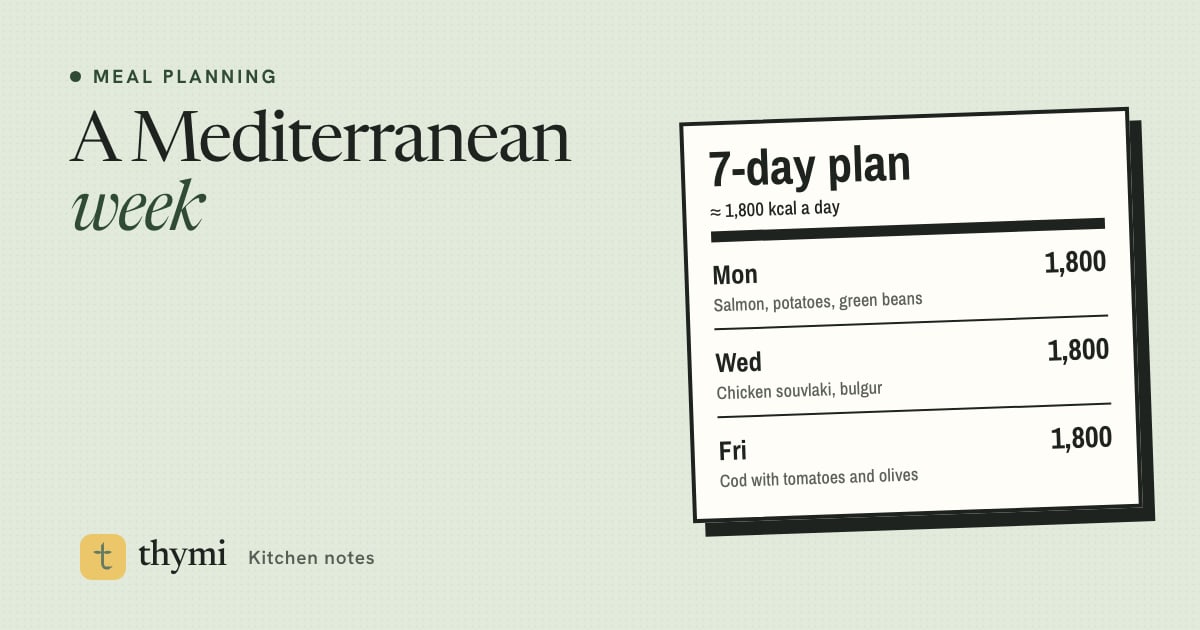
A Mediterranean diet meal plan builds each day around vegetables, fruit, whole grains, beans, nuts and olive oil, with fish at least twice a week and moderate amounts of chicken, eggs, yogurt and cheese. This 7-day plan comes to about 1,800 calories and 85 to 105 g of protein a day, which suits many adults aiming for gradual weight loss. Below you will also find easy swaps and a grocery list.
What is the Mediterranean diet?
The Mediterranean diet is a way of eating based on the traditional food patterns of countries around the Mediterranean Sea, such as Greece, southern Italy and Spain. It is not a strict diet with banned foods. It is an overall pattern, often drawn as a pyramid; the best-known version comes from the nonprofit Oldways. The pattern looks roughly like this:
- Every day, as the base of meals: vegetables, fruit, whole grains, beans and lentils, nuts and seeds, herbs and spices, with extra-virgin olive oil as the main fat.
- At least twice a week: fish and seafood.
- In moderate amounts: poultry, eggs, cheese and yogurt.
- Less often: red meat and sweets.
- Also part of the picture: water as the main drink, regular physical activity and sharing meals with others. Some versions include wine in moderation with meals, but it is optional, and you do not need to start drinking.
It is one of the most widely studied eating patterns and is often recommended by mainstream health bodies. The Dietary Guidelines for Americans include a “Healthy Mediterranean-Style Dietary Pattern” as one example of a healthy way to eat, and the NHS describes a Mediterranean-style diet as a healthy choice. Part of its appeal is that it is flexible and does not ask you to give up any food group.
The Mediterranean diet for weight loss
The Mediterranean diet is not automatically a weight-loss diet. You lose weight when you eat fewer calories than you burn over time, and some Mediterranean staples are very calorie-dense. Olive oil has about 120 kcal per tablespoon, and a small handful of almonds or walnuts (1 oz / 28 g) is about 165 to 185 kcal, according to USDA FoodData Central. A generous drizzle and a few handfuls of nuts can quietly add several hundred calories to a day.
What the pattern does well is fill you up. Vegetables, beans, lentils, whole grains and fruit are high in fiber and water, and fish, chicken, eggs and yogurt bring protein. That makes a moderate calorie deficit easier to stick to. To use it for weight loss:
- Measure olive oil with a spoon instead of pouring from the bottle, at least until you know what a tablespoon looks like in your pan.
- Portion nuts, cheese and bread. They are part of the diet, but in measured amounts.
- Fill half the plate with vegetables and include a protein at every meal.
- Watch the drinks. If you do drink wine, count it; a 5 oz (150 ml) glass is roughly 120 to 125 kcal. Our guide to calories in alcohol has more.
The 7-day plan below is set at about 1,800 kcal a day, a level that suits many adults aiming for gradual weight loss. Your own number may be higher or lower; see how many calories you should eat a day and scale portions to fit.
7-day Mediterranean diet meal plan (≈ 1,800 kcal)
Each day has three meals and a snack, with about 85 to 105 g of protein. Dinners often make enough for the next day's lunch, so you are not cooking from scratch twice a day. Calories and protein are rounded estimates for typical portions, based on USDA FoodData Central values.
| Day | Breakfast | Lunch | Dinner | Snack | ≈ kcal | ≈ protein |
|---|---|---|---|---|---|---|
| Mon | Greek yogurt (¾ cup / 200 g) with berries, 1 tsp honey and 1 tbsp walnuts | Chickpea, cucumber, tomato and feta salad with olive oil and lemon, small whole-grain pita | Baked salmon (5 oz / 140 g raw) with roasted potatoes and green beans (make extra salmon) | Apple and 15 almonds | 1,800 | 85 g |
| Tue | 2 eggs scrambled with spinach and tomato in olive oil, whole-grain toast | Leftover salmon over greens with white beans and lemon dressing, bread | Whole-wheat pasta with lentil-tomato sauce, parmesan and a side salad (make extra) | ¼ cup hummus with carrot and cucumber sticks | 1,800 | 90 g |
| Wed | Oats cooked in milk with grated apple, cinnamon and walnuts | Leftover lentil pasta | Chicken souvlaki skewers (5 oz / 150 g) with tzatziki, bulgur and Greek salad (make extra chicken) | Orange and a small handful of pistachios | 1,800 | 95 g |
| Thu | Greek yogurt with berries and walnuts | Leftover chicken in a whole-wheat wrap with hummus and salad | Shakshuka (2–3 eggs in a pepper-tomato sauce) with feta and whole-grain bread | Pear and 1 oz (28 g) cheese | 1,750 | 90 g |
| Fri | Whole-grain toast with ricotta, tomato and olive oil, 1 boiled egg | Big salad with canned tuna, chickpeas, olives and peppers, bread | Baked cod with tomatoes, olives and capers, couscous and roasted zucchini | Greek yogurt with walnuts | 1,800 | 105 g |
| Sat | Oats with Greek yogurt, berries and sliced almonds | Lentil and vegetable soup with crusty bread and a little feta (make a big pot) | Lemon-oregano chicken thighs with chickpeas, peppers and red onion on one tray, couscous (make extra) | Hummus and vegetable sticks | 1,800 | 95 g |
| Sun | Vegetable omelet with feta, whole-grain toast | Leftover chicken and chickpea traybake in a pita | Shrimp and vegetable skewers with a herby quinoa, tomato and parsley salad | 2 dates and 10 almonds | 1,800 | 100 g |
Use about 1 to 2 tablespoons of olive oil across the whole day, and measure it. That is plenty for cooking and dressings, and it is the single biggest lever on whether the day lands near 1,800 kcal or well above it.
Changing the calorie level
- For about 1,500 kcal: drop the snack or halve the bread, pasta and couscous portions, and keep olive oil to about 1 tablespoon a day. Our 1,500 calorie meal plan shows a full day.
- For about 2,000 kcal or more: add a piece of fruit with a few nuts, a larger grain portion or an extra slice of whole-grain bread. See the 2,000 calorie meal plan.
- For more protein: use strained yogurt, add an egg at breakfast and keep fish or chicken portions generous. Our high-protein meal plan has more ideas.
Easy Mediterranean swaps
You do not need to cook Greek or Italian food every night to eat this way. Small swaps in the meals you already make move you most of the way there.
| Instead of | Try | Why |
|---|---|---|
| Butter for cooking | Olive oil, measured | Mostly unsaturated fat, the main fat in the pattern |
| White bread, white pasta | Whole-grain bread, whole-wheat pasta, bulgur, farro | More fiber, more filling |
| Red meat several times a week | Fish, chicken, beans or lentils on most days | Red meat becomes occasional rather than daily |
| Creamy dips and dressings | Hummus, tzatziki, lemon and olive oil | More flavor for similar or fewer calories |
| Chips or cookies as a snack | Fruit, a measured handful of nuts, yogurt, vegetables and hummus | Adds fiber and protein instead of mostly sugar and refined starch |
| Salty seasoning mixes | Garlic, lemon, oregano, parsley, cumin, chili flakes | Less salt, more taste |
| Fruit desserts with added sugar | Fresh fruit, or yogurt with fruit and a little honey | Sweets are kept for occasional treats |
Tip: canned fish (sardines, salmon, tuna), canned beans and frozen vegetables are fully Mediterranean and much cheaper than fresh fish fillets. If cost is a concern, our cheap healthy meal plan shows how to build a week around low-cost staples.
Mediterranean diet grocery list
This list covers the 7-day plan for one person, with a few leftovers. Check what you already have first; many items, like olive oil, spices and grains, will last for several weeks. For a reusable list, see our healthy grocery list.
Protein
- Salmon fillets, about 10 oz (≈ 280 g), fresh or frozen
- Cod or other white fish, about 5 oz (≈ 150 g)
- Shrimp, about 5 oz (≈ 150 g), frozen is fine
- Chicken breast for skewers and chicken thighs for the traybake, about 1½ lb (≈ 700 g) in total
- Eggs, 1 dozen
- Canned tuna, 1 can
- Canned chickpeas (3 cans), white beans (1 can), dried or canned lentils
Dairy
- Plain Greek yogurt, large tub (about 32 oz / ≈ 1 kg)
- Feta, a small block; parmesan; ricotta, a small tub
- Milk for oats
Grains and bread
- Rolled oats, whole-wheat pasta, bulgur, couscous, quinoa
- Whole-grain bread, whole-wheat pitas and wraps
Vegetables and fruit
- Tomatoes, cucumbers, bell peppers, zucchini, red onions, onions, garlic
- Spinach and salad greens, green beans, carrots, potatoes
- Fresh parsley, lemons
- Berries (fresh or frozen), apples, oranges, pears, a few dates
Pantry
- Extra-virgin olive oil
- Canned chopped tomatoes (2–3 cans), tomato paste
- Olives, capers, hummus (or tahini to make it)
- Walnuts, almonds, pistachios
- Dried oregano, cumin, paprika, cinnamon, chili flakes, honey
Tips for sticking with it
- Start with two changes. For example, fish twice a week and olive oil instead of butter. Add more once those feel normal.
- Cook once, eat twice. Make extra at dinner for the next day's lunch, as in the plan above.
- Make beans and lentils a habit. They are cheap, filling and rich in fiber. Most adults fall short on fiber; see how much fiber you need per day.
- Keep it flexible. The pattern works with many cuisines. A lentil curry, a bean chili or a vegetable stir-fry with fish can all fit, as long as most of the plate is plants and the fat is mostly olive oil.
- Eat slowly and with others when you can. Sharing meals is part of the traditional pattern, and eating slowly can help you notice when you are full.
Frequently asked questions
What do you eat on the Mediterranean diet?
Mostly vegetables, fruit, whole grains, beans, lentils, nuts, seeds and herbs, with extra-virgin olive oil as the main fat. Fish and seafood are eaten at least twice a week, poultry, eggs, cheese and yogurt in moderation, and red meat and sweets less often.
Is the Mediterranean diet good for weight loss?
It can be, as long as you eat fewer calories than you burn. Its vegetables, beans, whole grains and protein foods are filling, which makes a deficit easier to keep, but olive oil, nuts and cheese are calorie-dense, so measure them.
How many calories is a Mediterranean diet meal plan?
There is no fixed number. The sample plan in this guide is about 1,800 calories a day, which suits many adults aiming for gradual weight loss, but you can scale portions up or down to match your own calorie target.
How much olive oil should I use on the Mediterranean diet?
There is no single official amount. For a calorie-controlled plan, about 1 to 2 tablespoons a day for cooking and dressings is a practical range. Each tablespoon is about 120 calories, so measure it rather than pouring freely.
Can I follow the Mediterranean diet on a budget?
Yes. Build meals around dried or canned beans and lentils, oats, whole-wheat pasta, eggs, plain yogurt, canned fish such as sardines or tuna, and frozen vegetables. Buy olive oil, grains and spices in larger sizes when the unit price is lower.
This article is general information for healthy adults, not medical or nutritional advice. Talk to a doctor or registered dietitian before changing how you eat, especially if you are pregnant or breastfeeding, have or have had an eating disorder, have a medical condition, or take medication.