Meal planning
Cheap Healthy Meal Plan: A 7-Day Budget Plan and Grocery List
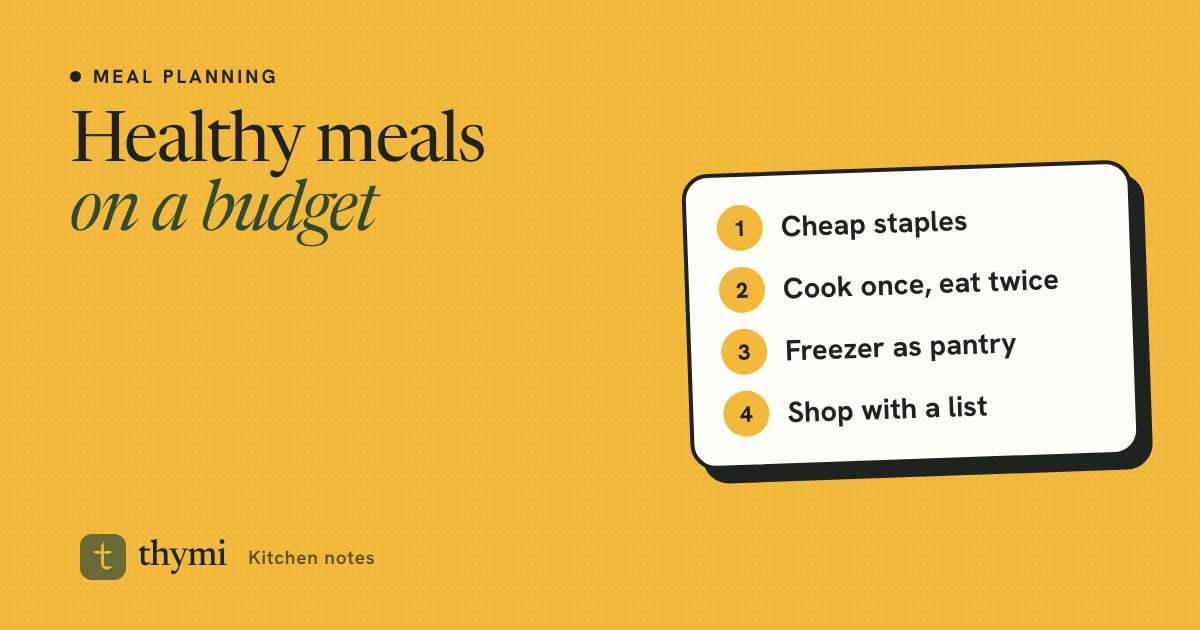
A cheap healthy meal plan is built on a handful of low-cost staples (oats, rice, potatoes, beans, lentils, eggs, frozen vegetables and seasonal fruit), cooked in batches so one dinner also becomes the next day's lunch. Below you will find seven budget meal planning strategies, a 7-day plan at roughly 1,800 to 1,900 calories and about $6–9 a day in the US, and a grocery list to shop from.
What makes a meal plan cheap and healthy
A healthy meal plan on a budget is not about finding the single cheapest food. It is about building most meals from a small set of foods that are low in cost per serving and still give you protein, fiber and plenty of vitamins and minerals. Mainstream advice such as the Dietary Guidelines for Americans and the NHS Eatwell Guide points to the same basic shape of eating: lots of vegetables and fruit, whole grains or starchy foods, a source of protein at most meals, and not too much added sugar, salt or saturated fat. Conveniently, the foods that fill that shape are often the cheapest in the store.
Three things drive the cost of a week of food more than anything else:
- Where your protein comes from. Beans, lentils, eggs, chicken thighs, canned fish and plain yogurt usually cost far less per gram of protein than steak, fresh fish fillets or protein bars.
- How much you waste. The most expensive food is the food you throw away. A plan that reuses ingredients across several meals keeps waste low.
- How often you buy ready-made food. Takeout, meal deals and pre-cut or pre-marinated items add up quickly. Cooking a few simple dishes at home is where most of the savings come from.
Before you plan, decide roughly how many calories you need. The sample week below averages about 1,800 to 1,900 kcal a day, which suits many adults who want to lose weight slowly or maintain. If you are not sure of your number, start with how many calories you should eat a day, then scale portions up or down.
7 budget meal planning strategies that actually save money
1. Build around cheap staples
Pick a short list of low-cost foods and make them the backbone of the week: oats, rice, pasta, potatoes, dried or canned beans and lentils, eggs, frozen vegetables, bananas, apples, carrots, onions, cabbage and canned tomatoes. Then add one or two “interest” ingredients each week, such as a bag of spinach, a block of cheese or a jar of salsa, to keep meals from feeling repetitive.
2. Cook once, eat twice
Make every dinner big enough for the next day's lunch. A pot of chili, a tray of roast chicken thighs and potatoes, or a pan of lentil soup costs little more to cook in double quantity, and the second meal needs no extra time. This single habit cuts both cost and the temptation to buy lunch out. Our guide to meal prep for weight loss shows how to portion and store a batch.
3. Use your freezer as a pantry
Frozen vegetables and fruit are picked and frozen quickly, so they hold their nutrients well, and you only use what you need. Freeze extra portions of soups, chili and cooked grains as soon as they cool, and freeze bread you will not finish within a couple of days. A few labeled freezer meals are also your best defense against an expensive takeout night.
4. Compare unit prices, not shelf prices
The big number on the shelf tag tells you what the package costs. The small unit price (per ounce, per pound, per 100 g or per kg) tells you what the food costs. Shelf labels in most US, UK and European supermarkets show it. Larger bags of oats, rice and frozen vegetables are usually cheaper per unit, but only buy big if you will use it before it spoils.
5. Choose store brands
For basics such as oats, rice, canned beans, canned tomatoes, frozen vegetables, flour, milk and yogurt, store or own brands are often similar to the big brands and noticeably cheaper. Check the nutrition label if you want to compare; our guide to reading a nutrition label shows what to look at.
6. Shop with a list, after a plan
Plan the week first, check what you already have, then write the list. Shopping without a list (or hungry) is how expensive extras end up in the cart. If you are new to this, our step-by-step guide to how to meal plan walks through it.
7. Buy fresh produce that lasts
Carrots, cabbage, onions, potatoes, apples, oranges and bananas are cheap and keep well. Eat delicate produce like berries, salad leaves and soft herbs early in the week, and switch to sturdy or frozen vegetables later in the week.
Tip: plan meals around what is already in your fridge and anything on sale this week, not the other way round. Starting from a recipe usually means buying a full jar or bunch of something you only need a spoonful of.
The cheapest healthy foods, by job
Each meal needs a protein, a carb, some vegetables and a little fat. These are the budget picks for each job. Nutrition numbers are rounded from USDA FoodData Central.
| Job | Budget picks | Why it works |
|---|---|---|
| Protein | Eggs, dried or canned beans and lentils, chicken thighs, canned tuna or sardines, plain yogurt, milk, peanut butter | A large egg has ≈ 6 g protein; ½ cup (≈ 90 g) cooked lentils has ≈ 9 g protein and ≈ 8 g fiber |
| Carb | Oats, rice, pasta, potatoes, whole-wheat bread, tortillas | Filling and cheap per serving; oats and potatoes are also good for fiber |
| Vegetables | Frozen mixed vegetables, frozen spinach and peas, carrots, cabbage, onions, canned tomatoes | Long-lasting, low waste, adds volume for few calories |
| Fruit | Bananas, apples, oranges, frozen berries | Cheap per piece and easy snacks |
| Fat and flavor | Vegetable or olive oil, peanut butter, garlic, dried spices, stock cubes, soy sauce, salsa | Small amounts make cheap food taste good |
Beans, lentils, oats and potatoes do double duty: they are among the cheapest foods per serving and they are rich in fiber, which helps you stay full. See foods that keep you full for more on why that matters when you are eating less.
A 7-day cheap healthy meal plan
This plan is built on the strategies above. Dinners are cooked in double batches so they become the next day's lunch, and the same staples repeat through the week. Each day comes to roughly 1,800 to 1,900 kcal and about 75 to 95 g of protein. The cost estimate is a rough US range per person per day, about $6–9, and it varies by store and region; you will likely pay less if you already have oil, spices and condiments at home.
| Day | Breakfast | Lunch | Dinner | Snack | ≈ kcal | ≈ cost/day |
|---|---|---|---|---|---|---|
| Mon | Oats (½ cup / 40 g dry) cooked in 1 cup milk, banana, 1 tbsp peanut butter | 2 hard-boiled eggs, 2 slices whole-wheat toast, carrot sticks, apple | Bean and ground turkey chili with ¾ cup rice (cook double) | Plain yogurt with frozen berries | 1,800 | $6–8 |
| Tue | Oats with milk, banana, peanut butter | Leftover chili over a baked potato | Pasta with canned tuna, frozen peas and tomato sauce (cook double) | Toast with peanut butter | 1,850 | $6–8 |
| Wed | 2 scrambled eggs, toast, orange | Leftover tuna pasta | Sheet-pan chicken thighs, potatoes, carrots and cabbage (cook double) | Yogurt with a banana | 1,850 | $7–9 |
| Thu | Oats with milk, banana, peanut butter | Leftover chicken and potatoes in a tortilla with slaw | Red lentil soup with carrots and onion, bread (cook double) | Apple with 2 tbsp peanut butter | 1,850 | $6–8 |
| Fri | 2 eggs on toast | Leftover lentil soup with cheese toast | Egg fried rice with frozen mixed vegetables | Yogurt with a sprinkle of oats | 1,800 | $5–7 |
| Sat | Banana-oat pancakes (oats, egg, banana) | Black bean and rice bowl with salsa, cheese and cabbage slaw | Chicken thigh and frozen vegetable stir-fry with rice (cook double) | Popcorn and a glass of milk | 1,850 | $6–9 |
| Sun | Oats with milk, frozen berries | Leftover stir-fry | “Clear-out” frittata with leftover vegetables and potatoes, toast | Yogurt with berries | 1,800 | $5–7 |
Calorie figures are estimates for typical portions, rounded. Weigh or measure a few meals the first time you make them so you know what your own portions come to; our guide to estimating portions without a scale helps if you do not own one.
How to adjust the plan
- Need fewer calories? Trim the rice, pasta and bread portions first, and use 1 tsp of peanut butter instead of 1 tbsp. A tablespoon of peanut butter is ≈ 95 kcal, so small changes add up. Our 1,500 calorie meal plan shows a lower-calorie week.
- Need more? Add an extra slice of toast, a larger portion of rice or a second snack. See the 2,000 calorie meal plan for a fuller day.
- Want more protein? Add an egg to breakfast, use more beans or chicken in the chili, or swap regular yogurt for strained (Greek-style) yogurt when it is on offer. Our high-protein meal plan goes further.
- Vegetarian? Use extra beans or lentils in the chili and swap the chicken for eggs or tofu. See vegetarian protein sources for cheap options.
Cheap healthy grocery list for the week
This list covers the 7-day plan for one person. Quantities are approximate; check your cupboards before you shop and cross off what you already have. For a broader list you can reuse every week, see our healthy grocery list.
Protein and dairy
- Eggs, 18-count pack
- Chicken thighs, about 2 lb (≈ 900 g), bone-in or boneless, whichever is cheaper per pound
- Ground turkey or lean ground beef, about 1 lb (≈ 450 g)
- Canned tuna, 2 cans
- Plain yogurt, large tub (32 oz / ≈ 1 kg)
- Milk, half a gallon (≈ 2 L)
- Cheddar or other block cheese, small block (grate it yourself)
Beans, grains and pantry
- Rolled oats, large bag or canister
- Rice, 2 lb (≈ 1 kg) bag
- Pasta, 1 lb (≈ 450 g)
- Red lentils, 1 lb (≈ 450 g) bag
- Canned kidney beans and black beans, 2 cans each (or dried, which are cheaper still)
- Canned chopped tomatoes, 3 cans, and a jar or can of tomato sauce
- Whole-wheat bread, 1 loaf, and a pack of tortillas
- Peanut butter, popcorn kernels, salsa
- Pantry basics if needed: oil, stock cubes, chili powder, cumin, garlic powder, soy sauce
Produce and frozen
- Bananas (7–8), apples (4–5), oranges (2–3)
- Potatoes, 5 lb (≈ 2.5 kg) bag
- Carrots, 2 lb (≈ 1 kg) bag, onions (4–5), a head of garlic, 1 green cabbage
- Frozen mixed vegetables and frozen peas, 2 large bags
- Frozen berries, 1 bag
Good to know: prices change constantly and differ a lot between stores and countries. Treat the daily cost range as a rough guide only; your receipt will depend on where you shop, what is on sale and what you already have.
Keeping a budget meal plan going
- Repeat what works. Once you have a week you like, reuse it with small changes. Rotating three or four weeks is plenty of variety for most people.
- Keep a “use it up” night. Frittatas, fried rice, soups and wraps turn odds and ends into dinner.
- Batch your spices and sauces. A homemade taco seasoning or a simple yogurt-garlic sauce costs pennies and makes the same staples taste new.
- Look at your receipt. Once a month, check which items cost the most. It is often snacks, drinks or ready meals, not the vegetables.
- Do not trade health for savings on protein. Eating enough protein helps you stay full and protects muscle, especially if you are eating in a deficit. See how much protein you need a day.
The USDA publishes a monthly “cost of food” report with sample food plans at several budget levels, and many supermarkets, food banks and public health services publish low-cost recipe collections. They are good places to find new ideas that fit the same staples.
Frequently asked questions
How can I eat healthy on a tight budget?
Build most meals from low-cost staples such as oats, rice, potatoes, beans, lentils, eggs, frozen vegetables and seasonal fruit. Plan the week before you shop, buy from a list, compare unit prices, choose store brands, and cook dinners in double batches so leftovers become lunch.
How much does a cheap healthy meal plan cost per day?
It depends heavily on where you live and shop. The sample plan in this guide comes to roughly $6 to $9 per person per day in the US, but prices vary by store and region, and you will pay less if you already have oil, spices and other pantry basics.
What are the cheapest healthy foods to buy?
Common budget picks include oats, rice, pasta, potatoes, dried or canned beans and lentils, eggs, peanut butter, plain yogurt, milk, chicken thighs, canned tuna, carrots, cabbage, onions, bananas, apples, and frozen vegetables and fruit.
Are frozen vegetables as healthy as fresh?
Generally, yes. Frozen vegetables are usually frozen soon after harvest, so they keep their nutrients well, and you only use what you need, which cuts waste. Choose plain frozen vegetables without added sauces, butter or salt when you can.
Can a cheap meal plan help with weight loss?
Yes. Weight loss comes down to eating fewer calories than you burn over time, and budget staples like beans, lentils, oats, potatoes and vegetables are filling for their calories. Adjust portion sizes to your daily calorie target and keep protein at most meals.
This article is general information for healthy adults, not medical or nutritional advice. Talk to a doctor or registered dietitian before changing how you eat, especially if you are pregnant or breastfeeding, have or have had an eating disorder, have a medical condition, or take medication.